

A Vogue headline went viral, setting off yet another cycle of TikTok users declaring women’s choices embarrassing.
In October, when Vogue UK asked whether having a boyfriend is embarrassing, it was meant as a tongue-in-cheek take on modern independence; a reminder that women don't need a man to feel validated or complete.
But TikTok quickly reshaped the question into a different story altogether. Once removed from context, the headline became a punchline, inspiring a wave of videos insisting that the new cultural ideal, or at least the trending one, is being single.
This conversation quickly overtook my For You Page and yes, while the deeper message – that women are independent and don’t need male validation – is powerful, it was completely overshadowed.
The claim that having a boyfriend is now “embarrassing” and that being single is trendy just felt like one more item added to the never-ending list of things women can and can’t do.
Because online, embarrassment applies to everything:
It’s embarrassing to go out and party, but if you stay home, you’re boring.
Wear a short skirt and you’re a slut, but wear baggy clothes and you’re masculine.
Put on makeup and you’re trying too hard, but go without makeup and you’ve let yourself go.
Be thin and you’re attention-seeking, but be fat and you’re lazy.
This isn’t coincidence, it’s conditioning. For decades, media has held enormous power over the way women see themselves, teaching us, often very subtly, to anticipate judgement before it even arrives. These impossible expectations don’t appear out of nowhere, they’re learned.
From Vogue to TikTok
The original Vogue piece by writer Chanté Joseph argued something rather simple, namely that women today don’t need romantic partnerships for validation. It celebrated independence, not the idea that boyfriends are cringe.
Ironically, Joseph leaned into embarrassment as a hook, using it as the punchline to spark a serious conversation and catch our attention in the first place.
But the TikTok interpretation slid quickly into mockery and became a completely different narrative. The deeper meaning of self-sufficiency was quickly overshadowed by a trend that rewarded exaggeration and ridicule.
This transformation happened fast because online, women’s choices are always sped-run to punchlines. It takes no time at all for something sincere and serious to become cringe, or for a women’s personal preference to be reframed as a public flaw.
What began as a reflection on independence became yet another opportunity to spotlight women’s behaviour.
The rise of TikTok trends like "the cool girl" reinforces this contradiction. On the one hand, she is unbothered, emotionally detached, low-maintenance, effortlessly single. On the other, the same platform idolises "the clean girl,” polished, organised, in a stable relationship, and always out together. Women are expected to embody both at once, effortless, and meticulous, independent but never intimidating.
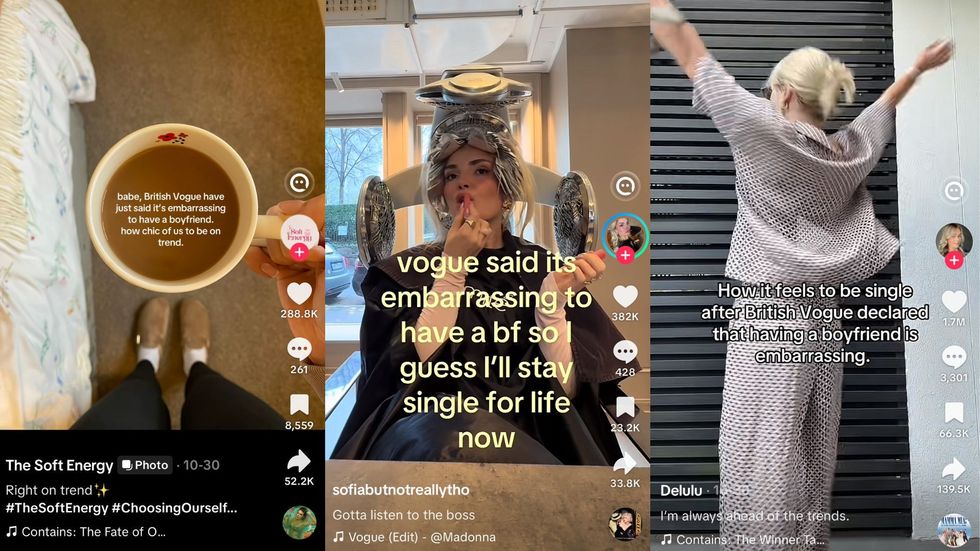 What was once considered embarrassing - being single - was suddenly the trend.Screenshots from The Soft Energy, Sofiabutnotreallytho, and Delulu TikTok's
So, when TikTok declared that having a boyfriend is “embarrassing”, it wasn’t really about relationships at all. It quickly became a new way to rank women by their choices.
On my feed, single women leaned into the trend proudly, with statements like: “British Vogue have just said it’s embarrassing to have a boyfriend. How chic of us to be on trend”, as through singlehood had suddenly become the only socially acceptable stance.
At the same time, women in relationships found themselves forced to justify something that previously required no explanation, posting content with captions like “sorry Vogue but having a bf is only embarrassing if he’s a loser.”
The comment section themselves kept repeated the same line: "This is so embarrassing".
It didn’t matter whether the woman posting was single or partnered, someone, somewhere, was declaring it humiliating.
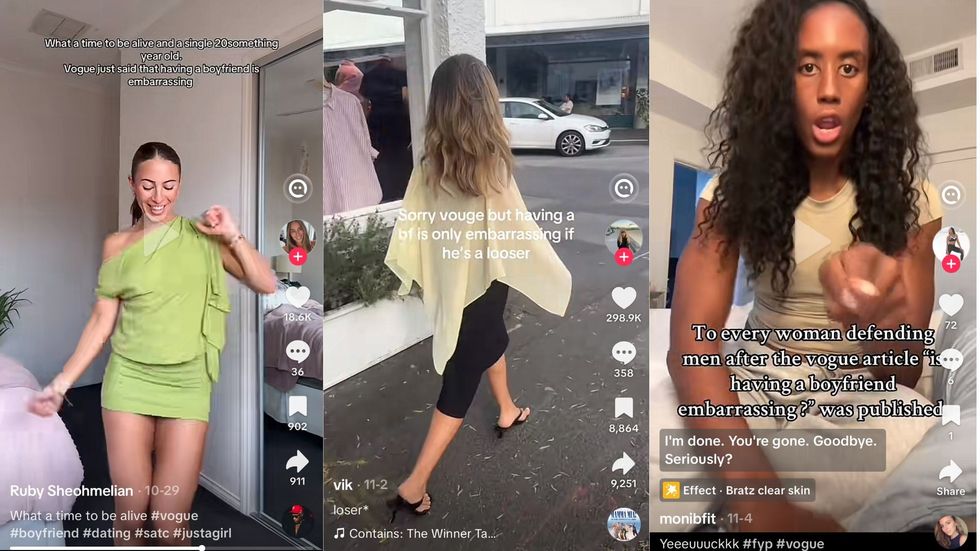 Women in relationships were unexpectedly pushed into defending something that had never been controversial.Screenshots from Ruby Scheohmelian, Vik, and Monibfit's TikTok's
What was framed as humour became a competitive embarrassment contest.
Women on both sides were expected to perform their stance, justify it and signal the correct level of irony, all to avoid being the wrong kind of embarrassed.
Because on TikTok, shame is always just beneath the punchline.
Impossible standards
What makes these contradictions so exhausting is not just that they exist, but that women are expected to internalise them, to navigate and pre-empt judgement before it even arrives.
A scene in Greta Gerwig’s Barbie movie captured this tension perfectly. In her now iconic monologue, actor America Ferrera as single mom Gloria describes the emotional burden women carry:
“You have to be thin, but not too thin. And you can never say you want to be thin. You have to say you want to be healthy, but also you have to be thin.”
It’s the same dynamic playing out on TikTok. Women must be flawless but not obsessed, confident but never arrogant. Even empowerment becomes a trap when it’s evaluated like a performance.
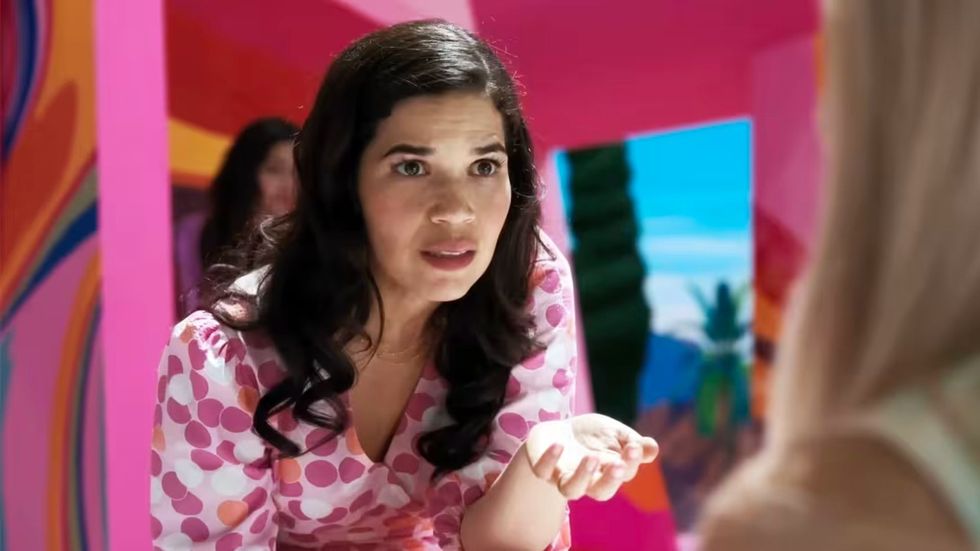 America Ferrera delivering her monologue in Barbie, speaking about the contradictory expectations placed on womenYouTube screenshot
Turning judgement into entertainment
If Barbie exposed the internal burden women carry, TikTok exposes the external version, the audience waiting to publicly cringe on our behalf.
Women become characters in comment sections. Algorithms reward judgement because judgement gets views.
This is where Billie Eilish’s spoken word piece Not My Responsibility feels painfully accurate:
In the short film, the singer asks: “Would you like me to be smaller? Weaker? Softer? Taller?”
Online, the answer is always yes, but never the same yes.
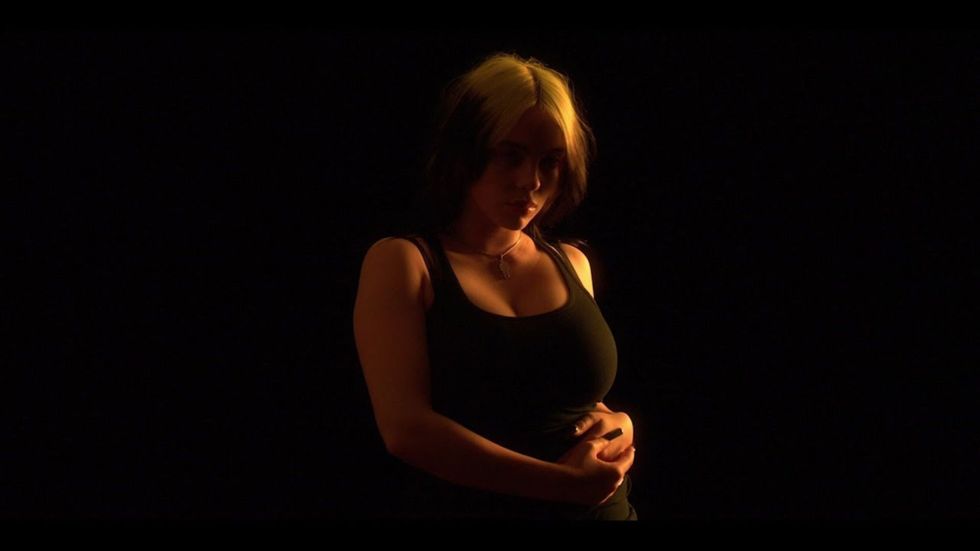 Billie Eilish puts words to the shame women are taught to absorb quietly.Screenshot from Billie Eilish film via YouTube
Later she asks:
“If I wear what is comfortable, I am not a woman. If I shed the layers, I'm a slut.”
This is how embarrassment becomes entertainment. A punchline feels harmless, but it achieves what misogyny attempts: silence through shame. The joke goes viral, the woman absorbs the humiliation privately.
The emotional toll
At some point, it becomes difficult to tell whether you’re choosing things because you genuinely want them, or because you fear they’ll be misinterpreted online. Shame doesn’t need to be spoken aloud, we anticipate it instinctively.
This is why trends declaring that boyfriends are “embarrassing” aren’t harmless jokes. For some women, relationships are joyful and grounding parts of their lives. For others, singlehood is empowering. Neither choice should require an explanation or a defence. But online, every choice must be justified and explained.
The truth is simple: women can’t win because the rules were never designed to be mastered.
The “embarrassing” label is just the newest method of control.
Eilish ends her monologue with a line that reads like a manifesto for surviving the modern internet:
“Not my responsibility.”
Women are not responsible for entertaining an audience, avoiding humiliation, or performing a perfectly balanced womanhood online. Not on TikTok, not in relationships, not in friendships, not in our own minds.
We deserve to exist without being evaluated.
We deserve to make choices without a running commentary.
We deserve to live without embarrassment being assigned to us like a personality trait.
Because the problem was never what women were doing. The problem is that someone is always watching, always judging, always ready to declare it wrong.
And it’s time we stopped accepting that judgement as truth.