


Australia is seen as the ideal location for new data centres, but some are worried about the environmental and social impacts
Data centres are a hot topic at the moment, with reports that a number will soon be built across Australia, driven by the AI boom.
These centres are likely to have significant environmental impacts along with social and economic consequences for the proposed communities where they’ll be built.
But what actually are they?
What is a data centre?
Data centres are large, sprawling buildings that store digital data within computer machinery and associated hardware equipment for organisations.
As businesses expand, so does their need for bigger data storage and equipment. And data centres are more cost efficient than storing information in various locations.
There are three main components inside the buildings. These include network infrastructure, which connects servers, various data centre services, and external connectivity to end-user locations; storage infrastructure, which holds organisations’ data; and computing resources which run applications.
 New data centres could employ thousands of workers in Australia. Shutterstock
AI data centres are just like regular data centres, but with operations increased tenfold. This is because AI generation requires significantly more power to operate.
Currently Australia has more than 285 data centres. This number includes operational, proposed, and developmental centres. It has previously been reported 162 are operational nationwide, but it is unclear if this remains the most current figure.
Why are they being built in Australia?
As at March 31, there were 90 reported proposed data centres in Australia with 44 for NSW and 30 for Victoria – including more in other states for which there is limited data – according to the Climate Council.
Not all data centres will be built due to uncertainty of forecasts in water and energy demand.
Currently Sydney has the most data centres in the country, with 94, compared to Melbourne’s 55. Perth has 25, Brisbane has 24, and Adelaide and Canberra both have 18. This includes operational, proposed, and developmental centres.
Recently, it was announced that AI company Firmus planned to build two additional data centres in Launceston, Tasmania, in addition to the one already planned there. If it goes ahead, this AI company will be the state’s biggest use of power.
The federal government’s 2025 national AI plan outlined the goals of AI investment (including data centres) as capturing opportunities, spreading the benefits and keeping Australians safe.
The report also stated that AI investment will help Australian workers and businesses to lead the global digital economy, and that the plan is part of a broader strategy to create "high-value jobs".
The plan does not appear to detail how these goals will be achieved beyond stating AI technology will be embedded into educational and business management areas.
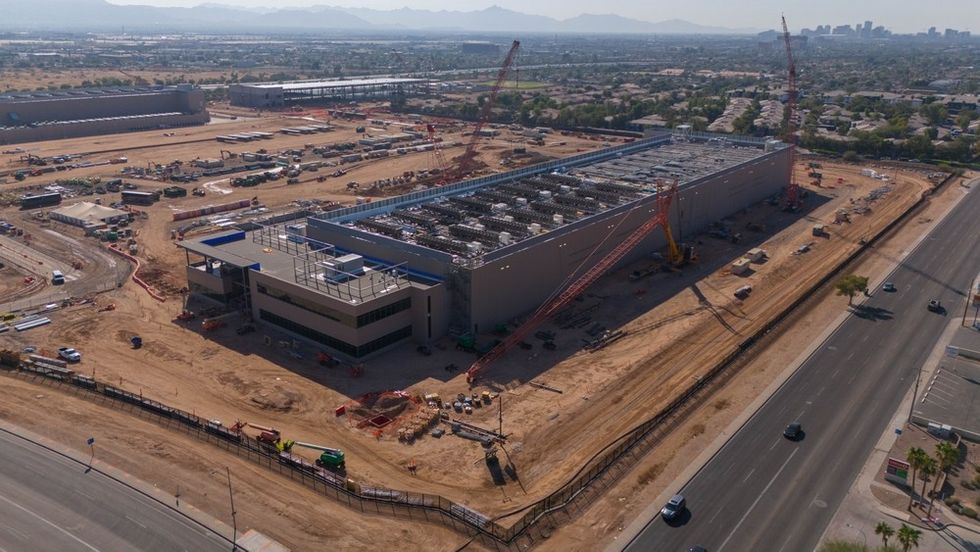 An aerial view of a US data centre in construction. Shutterstock
Construction times vary for data centres, but they typically take around 2 to 3 years to build. Hyperscale data centres are reported as taking somewhere between 18 and 36 months to build.
Australia is seen as the ideal location for these proposed data centres because of its renewable energy accessibility, land availability, strong legal protections, proximity to expanding economies, and stable operating environment.
But AI data centres will have significant impacts on the environment and cost of living.
What are the impacts of data centres?
AI data centres use the same resources of regular data centres — but at extreme rates due to their enhanced capabilities. High consumption of electricity, gas, and water during their construction and operations are the major causes for concern.
At the time of publication, the Australian Energy Market Operator (AEMO) stated that 162 operational data centres use 2 per cent of the country's electricity. This is expected to reach 6 per cent by 2030.
For example, the Climate Council reports that a 1.2 GW proposed data centre in Sydney could become Australia’s largest energy user, with the construction of six four-storey buildings, 936 cooling units, 852 diesel back-up generators, and 14.4 million litres of diesel storage.
Carbon emissions are also a major concern. Greenpeace APAC research found that this proposed Sydney data centre would generate peak annual grid emissions to the equivalent of 560,000 petrol cars for a year, or all domestic flights within NSW in 2023.
And Greenpeace says that proposed data centres built by Sydney company Cloud Carrier would wipe out all of NSW’s projected emissions cuts in 2028, because of its gas-fired power station.
What about water usage?
Water is in high demand to cool these facilities because of their power and vastness.
A recent United Nations report found that by 2030, global electricity consumption of data centres will equate to 9.3 trillion litres of water, which is equivalent to the minimum annual domestic needs of 1.3 billion people in Sub-Saharan Africa for one year.
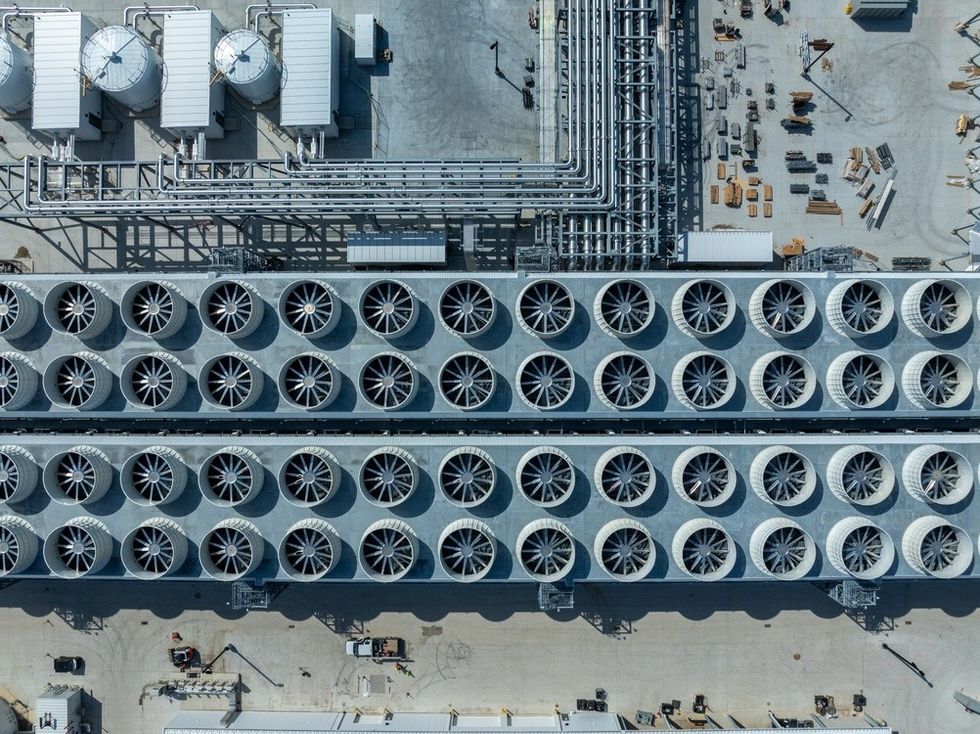 Data centres use enormous amounts of water for cooling Shutterstock
However, in Australia, data centres currently use less than 0.1 per cent of Australia’s total water. Michael Vardon, associate professor of environmental accounting at Australian National University writing for The Conversation, said it is difficult to estimate the future water usage because of limited data.
Australian data centre operator Next DC states on their website it is 100 per cent carbon neutral and that it operates the most energy efficient data centres in the country.
US-based data centre operator AirTrunk has committed to net zero by 2030, and in its FY25 sustainability report it states that it used energy-efficient liquid cooling in an Asian data centre.
So what are the benefits of data centres?
The federal government states that data centres will create jobs, enhance the economy, and improve scientific research in outlining expectations for Australia’s AI investment.
And in a report commissioned by five of Australia’s biggest data centre operators (AirTrunk, Amazon Web Services, CDC Data Centres, Microsoft and NEXTDC), consulting firm Mandala stated that the employment benefits from these facilities will reach 17,900 by 2030.
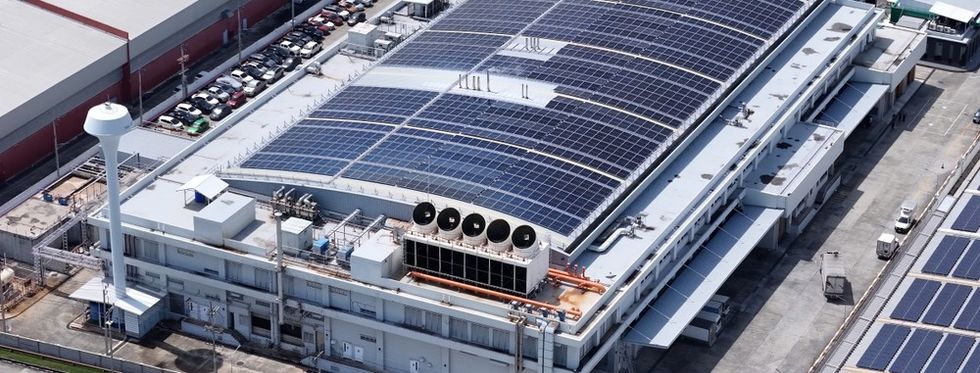 Data centres could enhance the Australian economy but have widespread environmental impacts. Shutterstock
Who owns data centres?
Many different companies own data centres across Australia including NextDC (whose main customer will be OpenAI ), the hyperscale operator AirTrunk, and Firmus Technologies, who is building Launceston’s facilities.
Technology companies such as Microsoft, Amazon, Google, and Meta have all pledged to invest in data centres in Australia.
Last year, Amazon Web Services announced a $20 billion investment, while Microsoft expanded its commitment from $5 billion in 2023 to $25 billion in April this year to the industry, over the next three years.
Related stories
I'm sick of throwing out good food. What can we do about it?


How young people are taking action on the climate crisis