

The founder and artistic director of NT Dance Company discusses the importance of Indigenous artists creating work on their own terms
Content Warning: This story contains discussions of the Stolen Generations, cultural displacement, identity loss and intergenerational trauma affecting Aboriginal and Torres Strait Islander communities.
Gary Lang stands barefoot in a rehearsal studio in Darwin, Northern Territory, watching dancers move through a sequence inspired by culture, loss, displacement and survival.
A raised arm pauses mid-air. Silence settles across the room. The soft scrape of feet against the studio floor is the only sound before the movement begins again.
For Lang, these moments carry stories that were taken from generations of Aboriginal people, but are now being reclaimed through performance.
He says Aboriginal performers are challenging underrepresentation by creating work on their own terms, rather than being interpreted by outsiders.
While acknowledging the positive intentions of these outsider creators, Lang believes something was missing.
"Now it's our people that are telling those stories. So it doesn't fall short," he says. "It comes from truth."
The proud Larrakia man from Darwin is the founder and artistic director of NT Dance Company, and he’s performed with renowned Aboriginal dance company, Bangarra Dance Theatre.
Over decades, Lang has developed a dance-theatre practice that incorporates Aboriginal storytelling into contemporary dance and ballet-influenced movement.
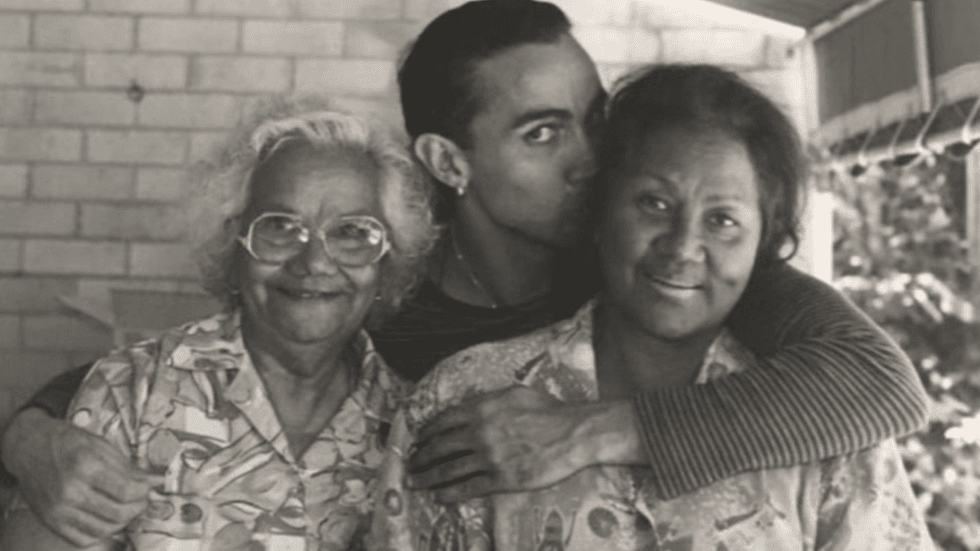 Lang comes from a family that has always valued storytelling. Supplied
Storytelling is not simply a profession for Lang.
"I come from a line of storytellers," he says, reflecting on a family tradition that stretches back generations.
In 2000, his mother Inez Cubillo-Carter self-published Keeper of Stories: The History of the Cubillo Family, a non-fiction book that included the story of his grandfather, a storyteller of old Darwin.
He describes Aboriginal storytelling as existing across multiple forms of expression.
"The artwork tells the story, the song tells the story, and the dance tells the story together," he says. "So, it’s like a braid that’s come together."
Lang’s most recent NT Dance Company production, The Other Side of Me, portrays a life shaped by removal, adoption, and displacement.
Based on historical letters and poems, the piece follows the true story of an Aboriginal man born in the NT in the 1960s, but raised by a white English family in the United Kingdom.
The experiences of the Stolen Generations caused deep cultural, familial and identity disruption for First Nations communities, with thousands of Aboriginal and Torres Strait Islander children forcibly removed from family, Country and culture.
After premiering in Darwin in 2023, the work recently toured Brisbane, Goulburn, Taree, Wollongong, Burnie and Hobart, with four nights at the Sydney Opera House.
Arts Hub reviewer Sharon Willdin described watching the production as "riding a wave", saying it was "skilfully executed" resulting in an "immersive experience that exists beyond words and requires us just to feel".
Lang hopes to educate audiences about histories many Australians remain unaware of. "There were so many other people that didn’t realize things were happening," he says.
Although the performance confronts difficult histories, Lang says its purpose is not to blame anyone.
"The work that I do is not to make people feel guilty," Lang says. "It’s informing people. It’s an Australian story."
Lang is part of a broader movement of First Nations artists advocating for greater control over cultural narratives. He says performance can challenge simplified versions of Aboriginal identity shaped by the legacy of removal and misrepresentation.
Research shows First Nations people have long been excluded from or misrepresented in mainstream media, making Aboriginal-led storytelling an increasingly important form of cultural representation.
Creative Australia’s 2025 Report consulted with more than 1,400 First Nations artists, cultural workers and communities, who displayed strong support for First Nations cultural authority and control of storytelling.
The report "highlights the need for longer-term investment, stronger support for cultural preservation, intergenerational knowledge sharing, skills development and career pathways, and infrastructure upgrades" for Indigenous creators.
Lang believes authentic representation is key. "It’s talking from an Aboriginal person’s point of view, not a non-Aboriginal person," he says.
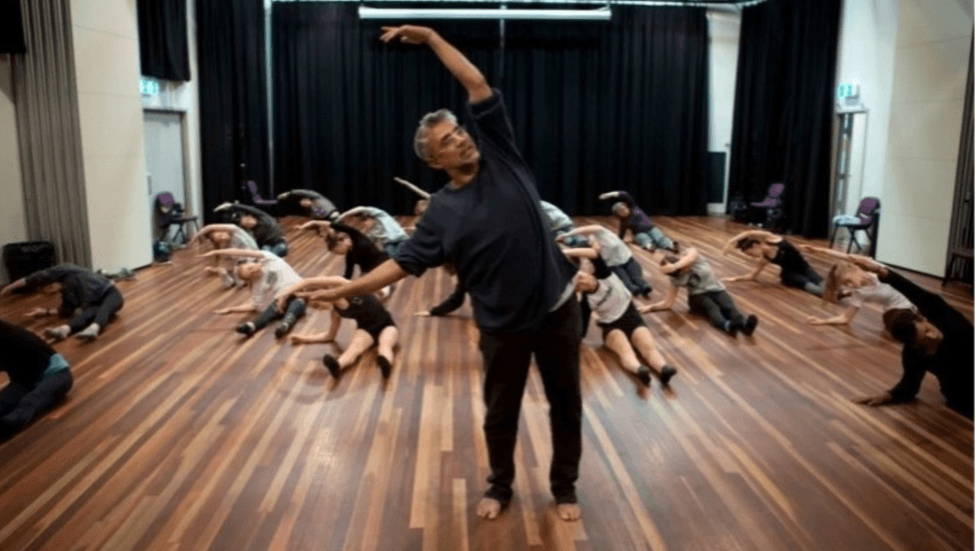 Lang is determined that emerging Indigenous artists tell their own stories Supplied
Since the defeat of the Voice to Parliament referendum in 2023, many questions about who is heard in Australian public life have remained unresolved.
For Aboriginal artists like Lang, the stage offers another platform for these questions: one built through presence, cultural authority, and direct connection with audiences.
Of the failure of the Voice referendum, Lang says, "First Nations people’s voices need to be heard first."
His emphasis on Aboriginal people telling their own stories reflects a broader shift across the arts sector towards self-determination.
"There are a lot of independent Indigenous dance makers, theatre makers that are coming through, and it’s fantastic to see," he says.
Lang believes emerging artists are creating meaningful change. "I want them to be the next generation," he says.
The possibilities of that future are reflected in BlakDance’s 2025-2030 Workforce Development Framework, which calls for expanded investment in a sustainable First Nations-led performing arts sector, including long-term First Nations representation across participating organisations, like NT Dance Company.
This would reflect what BlakDance describes as the sector’s contribution to truth-telling, cultural transmission and intergenerational knowledge sharing, where difficult histories can coexist alongside creativity and celebration. NT Dance Company is included in BlakDance's 2026 National Cultural Policy Submission.
Storytelling through performing arts invites Aboriginal performers to hold the complexities of grief alongside entertainment, trauma alongside strength, history alongside future.
For Aboriginal artists, the story does not vanish with the final movement.
"When it comes to theatre and dance, it’s a moment in time," Lang says. "How do we keep that moment in time still alive?"
His answer is in the work itself: in bodies moving through histories that were once spoken over, and in Aboriginal artists insisting those histories are told from the inside.
"We all have stories," Lang says.
If you or someone you know needs help, please contact Lifeline at 13 11 14 or 13YARN on 13 92 76



France protests, Christa Pike survives and Messi retires