

Advocates say providing young men with positive masculine role models could help them with mental health issues, and also help to prevent sexual assaults
Warning: This story discusses sexual assault and mental health issues
Recent reports of alleged sexual assaults by male students from two elite private schools and by Sydney Swans AFL players shocked many Australians.
Yet, while investigations into these high profile incidents are ongoing, they are only the latest in a disturbing rise in reported sexual assaults.
Data released by the Australian Bureau of Statistics in early September shows that the number of reported sexual assaults is almost 40,000. That's close to the number reported in 2024, which was the highest ever. More than 80 per cent of victims were female.
Similarly, the number of domestic and family violence offenders rose by 8 per cent in 2025 to almost 98,000. More than three-quarters of those offenders were male.
There are many questions to be answered about this disturbing trend, but some commentators are asking whether the rise of the manosphere has played a role?
And if so, what can be done about it?
The rise of the manosphere
The manosphere is a collection of social media accounts, websites and influencers that focus largely on men's interests.
Men's health charity Movember has been studying the manosphere for years.
"When [Movember] first started researching the manosphere, it was a small network of communities; they each had their own messaging or ideologies," says Emily Lewis, a research assistant with the charity’s Online Masculinities team.
"They were communities made up of men; they all shared a pretty strong grievance for feminism, for the progression of gender equality ... and a perception of victimhood as a result."
Lewis says these communities were initially fringe, congregating on platforms like 4chan and Reddit.
This has changed.
"Since then, we have seen a big movement and a big shift in which they are now occupying mainstream platforms [like] TikTok, Instagram, YouTube," she says.
"They are now what we call the mainstream manosphere."
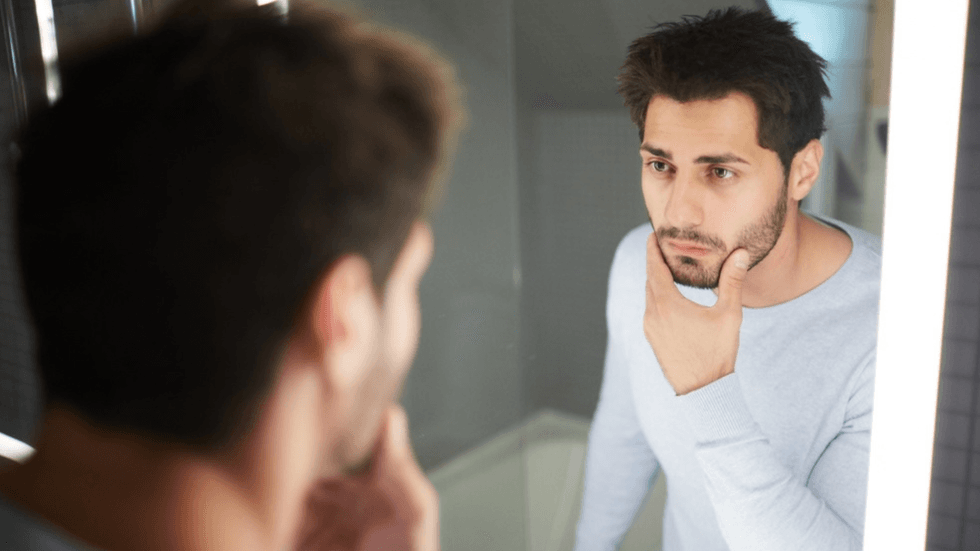 Young men with mental health issues are susceptible to the manosphere's narrativesShutterstock
Lewis says young men facing mental health issues are especially susceptible to the manosphere’s narrative.
She described the attraction of the misogynistic online groups as "a path of least resistance" for young men experiencing mental health difficulties.
"[Conversely, for some] it may feel like a path of most resistance to talk about [mental health] or to reach out. It may feel against one’s nature. [But] there is no nature in terms of masculinity. It is learned and it is socialised," she says.
Many young men struggle with their mental health. Last year, the Australian Institute of Health and Welfare reported that mental health conditions, along with substance abuse and injuries, pose a "large proportion of the burden in younger men".
This can lead to tragic outcomes. Recently, the ABS reported that suicide ideation was the most commonly mentioned risk factor for men aged under 25.
On average, seven men take their own lives in Australia every day.
Lewis says young men are increasingly seeking community online.
"We know that young men are going to the internet, we all are, and this is a space where they are socialising, they are forming their identity, looking for advice," she says.
But, once online, young men are increasingly pushed towards the manosphere. According to 2024 research from the Dublin City University Anti-Bullying Centre, manosphere content was fed to all male identified accounts within 23 minutes of use.
Connections to sexual assault
The manosphere has long been embroiled in controversy regarding its discussions of violence against women.
Dr Morgan E PettyJohn, an assistant professor at UT Arlington, says sexual violence is a "recurring organising theme in the manosphere".
She, like Lewis, points out that the manosphere presents a narrative where men are victims of the progression of feminism and women’s autonomy.
PettyJohn says "[discussions of sexual violence in manosphere circles portray men as the] 'real victims' while women's experiences of sexual violence are minimised, questioned, or reframed as evidence of anti-male bias."
"The manosphere treats sexual assault claims as a feminist conspiracy to target men", she says.
She explains that men accused of sexual assault are often assumed to be innocent within the manosphere, especially if they are in positions of power.
 Both Dr Morgan PettyJohn (left) and researcher Emily Lewis (right) say the manosphere presents a narrative that men are the victims of feminism.Supplied
She says existing evidence cannot directly link engagement in the manosphere with rates of sexual assault, because the manosphere is still a new phenomenon.
But PettyJohn says the "core ideologies" of the manosphere have been "well-established risk factors" in her research.
In Australia, young male attitudes towards violence against women have been under scrutiny recently, with a UniMelb Survey finding that 40 per cent of teenage boys believe women lie about sexual and domestic violence.
Trying to make a difference
Lewis believes out-competing the manosphere is the way to beat it.
She says presenting "more progressive and transformative ways of being a man … can be a very successful way of disrupting the manosphere".
Someone who is trying to do that is Adam McKay, a Gold Coast influencer who focuses on men’s mental health.
He’s clear about what he wants his content to communicate.
"As men, don’t let your fear and insecurity stop you from achieving happiness," he says.
This positive approach is rare amongst influencers advocating for male mental health welfare.
Many other male influencers depict what researchers describe as a rigid mould of masculinity where "muscularity, emotional suppression [and] financial abundance" become the hallmarks of the "high-value" male archetype.
Instead, McKay encourages his audience to better themselves and become more comfortable in reaching out about their own mental health.
McKay’s own experiences inform his content.
"I was bullied in high school and I was overweight, and I was always made fun of," he says.
"Only recently I had a guy come up to me from school, and he says ‘What you’re doing is really great, I’m sorry for how I treated you.’"
McKay says men’s mental health issues are widespread.
"When you tell a story about men’s mental health, and the struggles that us men face, a lot of people can relate to it. I guess that’s why I started.
"I get a lot of joy knowing that the stuff I’m putting out, it’s reaching people," he says.
How it impacts everyone
"Across the board, young men that engage with masculinity content … reported having poorer mental health, including greater feelings of depression, of worthlessness," Lewis says.
But she’s clear that the impacts of misogynistic content aren’t limited to men.
"Female teachers and even girls in classes are reporting really increased rates of misogyny and a repetition of manosphere talking points and manosphere content," she says.
Lewis says while positive online influencers can help, social media can only do so much. Real world positive influences are also needed.
"Role models in the way that they show up offline [are] just as important," she says.
"We often think of dads and brothers, teachers, as positive male role models. It can be anywhere in communities, community leaders, faith leaders, friends, peers. Showing up in those real-world interpersonal relationships is just as important," she says.
And ultimately, those struggling with mental health should be treated with support and care.
"Tell people ‘If you’re struggling, it’s okay to speak up'," McKay says.
"Keep pushing forward and don’t give up."
If you need someone to talk to, call:
- 1800 Respect National Helpline: 1800 737 732
- Lifeline (24-hour crisis line): 131 114
- The Butterfly Foundation on 1800 33 4673
- Kids Helpline on 1800 551 800