

Female fans are changing the male-dominated world of Formula 1, but there's still a lack of female drivers competing at the sport's highest levels
A surge in female fans is reshaping Formula 1 (F1), with women making up three in four of the sport’s newest fans.
According to the 2025 Global F1 Fan Survey, women now account for 42 per cent of the sport’s global audience, up from around 8 per cent in 2017.
The survey also shows that female fans generally skew younger, with women making up half of Gen Z fans.
This shift was on full display at this year's Australian Grand Prix in March, which drew a record 483,934 fans, the fifth consecutive attendance high at Melbourne’s Albert Park.
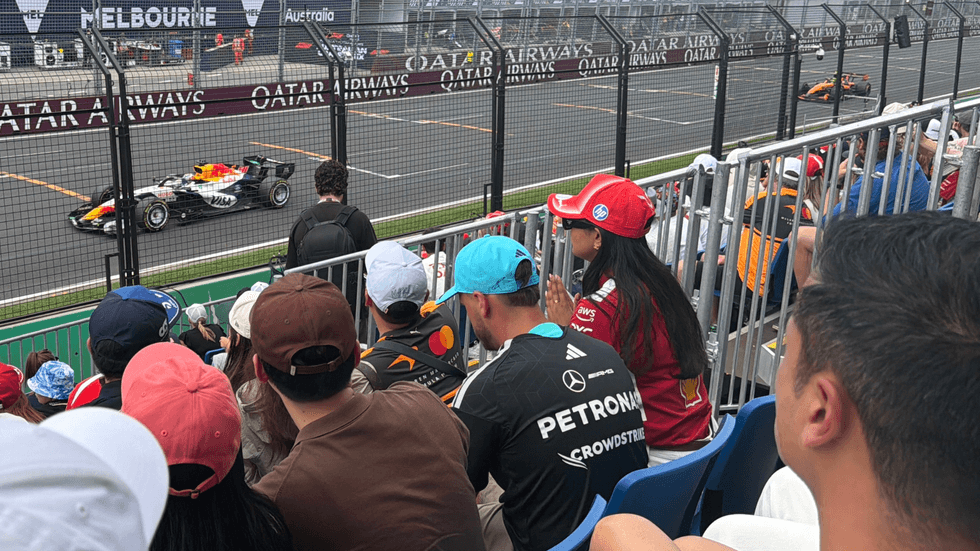 Young women are taking their place in the male-dominated world of Formula 1 fans Photo: Jacinta Shevelev
Former McLaren partnerships manager and current Head of Events and Experiences at Luxury Global Experiences, Kristen Ellard, has watched the transformation unfold firsthand
"Women would let their partners go or think it was more of a male-dominated sport, whereas it has completely shifted now," Ellard said.
"The experience has changed, [now] you go to the Grand Prix where they have a [beauty store] Mecca activation on the track."
Eleanor Baillieu, host of F1 podcast Paddock 43, also attended this year’s race and said the event’s atmosphere has changed. "Years ago, it felt a lot more boozy, with a lot more men. Now, I would feel very comfortable saying to my sister, who has a three-year-old and a six-month-old son, [to] bring them along."
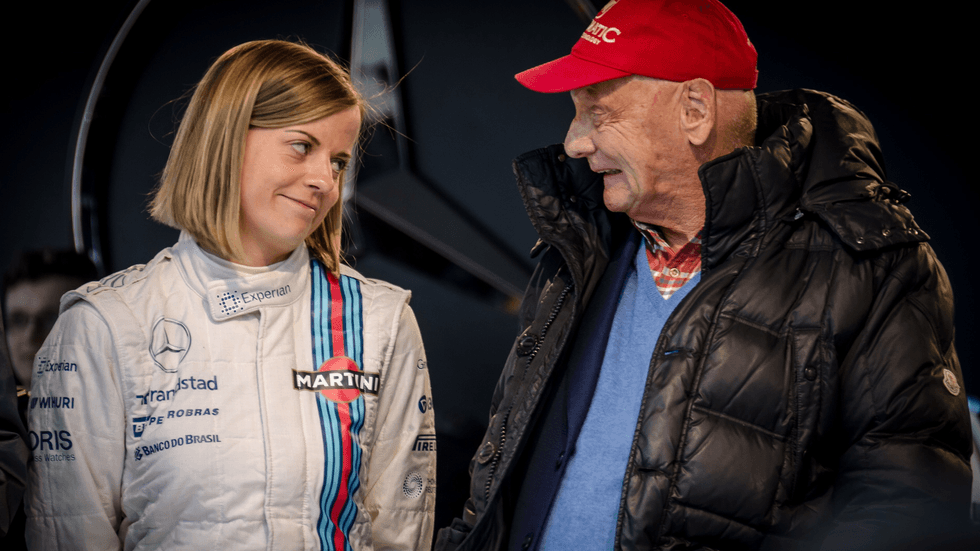 Pioneering Formula 1 driver Susie Wolff with legendary driver Niki Lauda Wikimedia Commons
Yet female fans continue to be dismissed despite their growing numbers and commercial influence, she said.
"Someone got angry at me the other day," Baillieu said. "They were like, ‘[You are] all just [tv show] Drive to Survive fans’."
"And I was just like, ‘No, that's not true. You're just not happy because we're now visible.’"
The Netflix show Drive to Survive, which debuted in 2019, is widely credited with opening up F1 to new audiences through its behind-the-scenes storytelling. But fans who discovered the sport through the tv series are routinely dismissed as less legitimate than those who came before.
Baillieu said the show changed everything for her.
"They gave us access to [the drivers’] lives. They gave us access to the teams that no one had seen before, and all of a sudden, it was a way that anyone — but in this instance particularly women — could really connect with the sport and do it on their own time frame and their own comfort level."
Ellard also cited the Liberty Media takeover of F1 as the turning point. The American Media company acquired the commercial rights to the sport from private equity firm CVC Capital Partners and longtime CEO Bernie Ecclestone in 2017.
The acquisition shifted F1 away from its traditional image towards a more entertainment-driven, digitally focused product. There was an increased investment in social media, streaming, fan engagement, and behind-the-scenes content. According a 2024 CNBC report, the sport's value has grown from $8 billion to $17 billion in 2023.
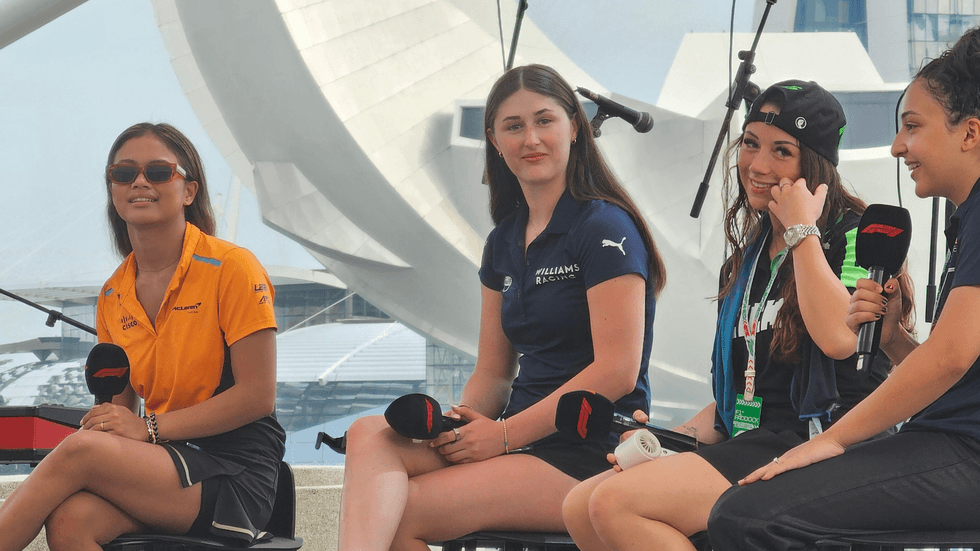 F1 Academy is supporting the rise of young female drives including Bianca Bustamante, Lia Block, Carrie Schreiner and Hamda Al QubaisiWikimedia Commons
In 2025, Teen Vogue described this transformation of the sport as the "K-popification" of F1. It was a nod to how drivers have become idols, races have become cultural events, and that the sport has expanded far beyond the track, intersecting with fashion and entertainment.
For some, the shift is a natural progression.
"It's just evolution. And there's always going to be people that are up in arms about it," said Baillieu.
For others, it raises questions about what F1 is becoming. "It’s still a sport," Ellard said. "But there is so much business in it that it has become such a big moneymaker."
However, the commercial case for greater inclusion remains unfinished. "If I'm making up 50 per cent of the fan base with other females, then why aren’t we having [feminine] brands that sponsor the teams? Why are they all very heavily masculine brands?" Baillieu said.
"Inclusion would look like a L'Oreal Paris sponsoring a team, rather than the men's division of L'Oreal Paris sponsoring [one driver on the grid]."
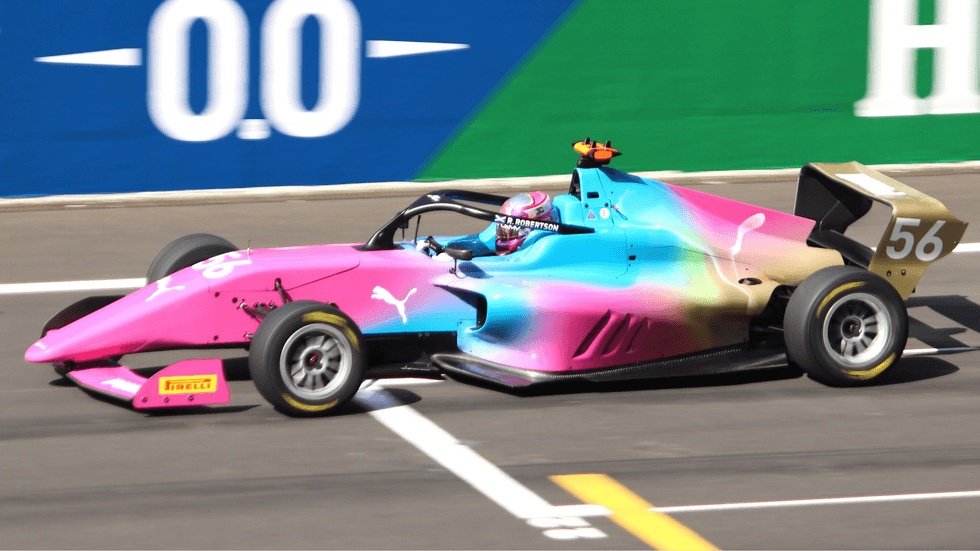 Rachel Robertson's car in 2026Wikimedia Commons
In 2024, make up brand Charlotte Tilbury was announced as the first beauty brand sponsor of F1 Academy, the female-only racing series developing young female drivers who race at selected F1 races on the calendar.
The Academy is run by Susie Wolff, who in 2014 was the first woman in 22 years to participate in a F1 race weekend as the Williams reserve driver.
In 2024 Netflix released a documentary series entitled F1: The Academy, which followed the female drivers.
The Global F1 Fan Survey reflected the impact of the F1 Academy, with almost a quarter of respondents saying they now follow F1 Academy. Among female fans, it jumps to 42 per cent making it their second-most followed series behind F1 itself.
So, with female fans now representing the sport's fastest growing and most commercially active demographic, the transformation appears unlikely to reverse.
"We've been able to control the narrative and influence such a large aspect of one of the world's richest sports," Baillieu said. "There is absolutely no harm in that."