


Once seen as the generation likely to skip the cinema, Gen Z is now the group going to the movies most regularly
Young people are keeping the movies alive, with recent data showing that Gen Zs were the most likely age group to attend the cinema in the last year. They also visit most often.
Cinema attendance is yet to return to pre-pandemic levels, with just 58.7 per cent of Australians visiting the cinema in 2024, compared to 68 per cent in 2019.
But Screen Australia reported that almost 70 per cent of 14- to 24-year-olds went to the movies in 2024, the highest of any age group. They were estimated to visit around five times over a three-month period, more often than any other age group.
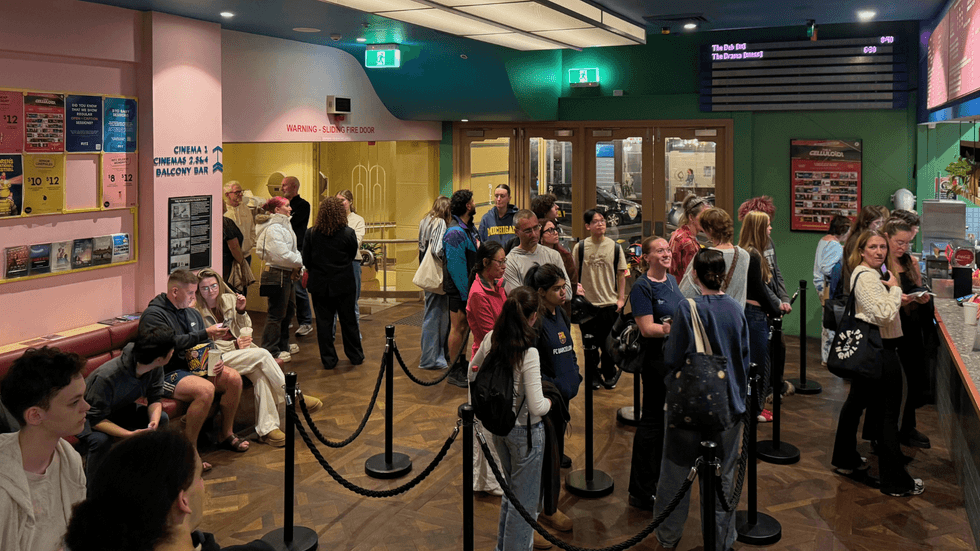 Young people are increasingly attending the cinema both in Australia and globally.Photo: Belle Huntly
This is a global trend, with under-35s in the United Kingdom now accounting for more than half of all cinema attendees. The generation once deemed to be the death of cinema is instead reshaping how and why they engage with films.
Last year, Susie Bould, the marketing director at film distributor Curzon, told the Guardian that social media plays a huge role in driving younger audiences to the cinema.
"Films just spark and go viral," she says.
The Disney film, Zootopia 2, is a prime example. It became Hollywood’s highest-grossing animated film of all time, drawing US$1.86 billion (A$2.56 billion) in global ticket sales during its 2025 theatre run. On opening night, 56 per cent of its audience was aged 18-34.
The film’s popularity among Gen Z was fueled by social media, with the hashtag #Zootopia2 on TikTok containing 301.5k posts. The leading man/fox, Nick Wilde, had audiences smitten, with clips featuring the charming fox garnering millions of views across TikTok, X and Instagram. One video posted by user @cohlefx on TikTok attracted 147.1m views and 19m likes.
@cohlefx Zootopia 2 in theaters now! #zootopia2 #nickwilde #judyhopps #disneyplus #edit #foryou
However, Disney animations aren’t the only films drawing Gen Z to the cinema.
Steve Williams, assistant manager at Randwick’s independent Ritz Cinemas, says a recent showing of the R-rated 1998 film, Happiness, attracted an audience mostly made up of people in their 20s.
This unexpected demand from Gen Z for cult classic screenings can likely be attributed to the social network Letterboxd. The platform allows users to log, review and discover films, while interacting with friends and fellow film enthusiasts.
The cultural conversations created by Letterboxd are helping drive younger audiences to the movies and allowing them to participate in film discussions.
Williams says the intense passion Gen Z has for films is a key driver in cinema’s resurgence. He believes young people want to feel a part of something, and that their generation is making a significant contribution to the arts.
For that, he says the cinema is the perfect place.
"Considering cinema is supposed to be a large experiential event … whenever there’s a chance to see a film on the big screen, Gen Z jump at the chance to do it," he says.
As of January 2026, Letterboxd had more than 27 million users, with this number growing by 9 million in just the past year.
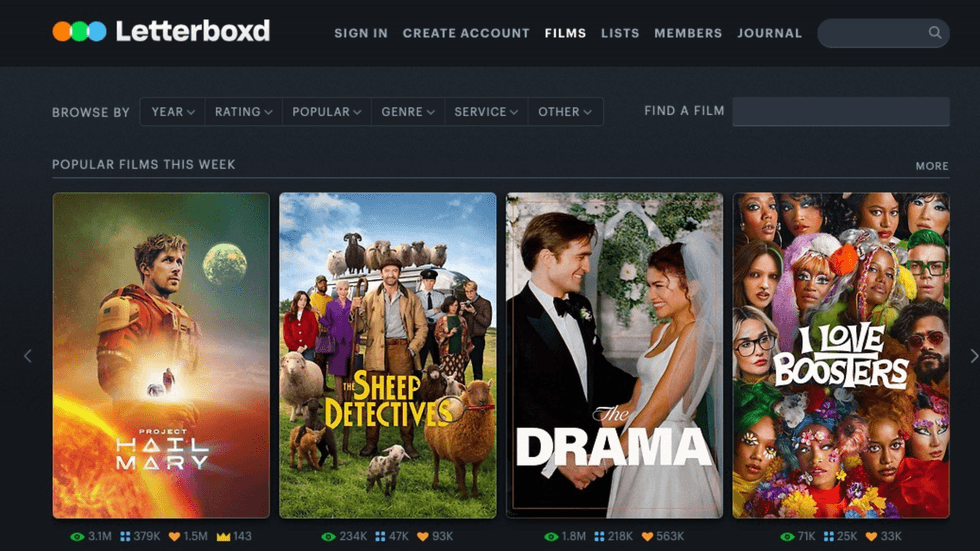 Letterboxd is growing rapidly Screenshot
These days, 20-year-old Sydneysider Hannah Jerich goes to the Ritz Cinemas more often than she did before. It’s become a weekly social event where she catches up with friends.
Jerich, who has been an enthusiastic member of Letterboxd for two years, agrees there’s been a rise in the platform's popularity recently, saying it has "definitely picked up in its success".
She appreciates Letterboxd’s ability to connect people at a time when this can be difficult.
"It definitely provides me with a sense of community. It allows me to connect with other people who like films. It also lets me join in conversations that I would miss out on in other aspects," she says.
Jerich says her routine of reviewing a film on Letterboxd and participating in the surrounding conversation helps her deepen her sense of identity.
"Movies often connect you with parts of yourself that you wouldn't necessarily think about unless you're routinely watching them," she says. "Reflecting on what I've seen [helps me] reflect on myself."
 Film marketers are paying increased attention to younger audiences. Shutterstock
Another key element of Gen Z’s online movie culture is the rise of fan edits.
These social media videos, created by fans, combine short movie clips with seamless transitions and music overlays. Some fan edits garner hundreds of millions of views across TikTok and Instagram.
According to advertising consultancy Ogilvy, as of 2025, 86 per cent of Gen Z identify as fans, with 64 per cent of young people considering themselves video content creators.
This is why movie studios, such as Lionsgate, are reportedly contracting fan editors to promote their films on social media, aiming to draw younger audiences into cinemas.
This marketing strategy is effective. Jerich says fan edits on her TikTok For You page, along with trending content, are part of how she decides which films to watch.
This fan-driven mentality helps explain why Jerich and other young audiences now routinely attend the cinema rather than streaming films at home.
"I'd get major FOMO [fear of missing out] if I didn't see certain films, not just online, but with friends. I feel like I'd be missing part of a conversation," she says.
And for many young people, going to the cinema is a way to be more present. This is true for Jerich, who admits she is tempted to go on her phone when she streams films at home.
"Going to the cinema allows me to give my complete attention to the film that I'm seeing. It also lets me be social and connect with other people seeing the movie," she says.







France protests, Christa Pike survives and Messi retires