

Star athletes Josh Azzopardi and Jason Saab say male athletes face stigma when dealing with mental health issues, but help is available
Warning: This story discusses mental health issues
As the AFL grapples with the fallout from the mishandling of Elijah Hollands’s mental health journey, two top athletes say there needs to be more awareness of the help available for sports people when they experience mental health issues.
In April, Hollands was hospitalised after an on-field mental health episode during a Carlton game against Collingwood.
After investigating the incident, the AFL fined Carlton, Hollands’ Melbourne club, $75,000 for the way it handled the incident. Going forward, all AFL clubs will be required to employ a full-time psychologist for players and other employees.
Olympian Josh Azzopardi and NRL player Jason Saab says all athletes need to know that help is available and that it can make a difference.
And both say sports people tackling the stigma surrounding mental health is the first step forward to overcoming this issue.
The stigma around men's mental health issues
According to a 2020 Australian Institute of Sport survey, athletes are significantly more likely to report "high to very high" psychological distress compared to the general community. They are more likely to report symptoms of depression and anxiety at a level that would warrant professional health care.
Male athletes have an additional hurdle to overcome, namely fighting against the stigma around mental health issues.
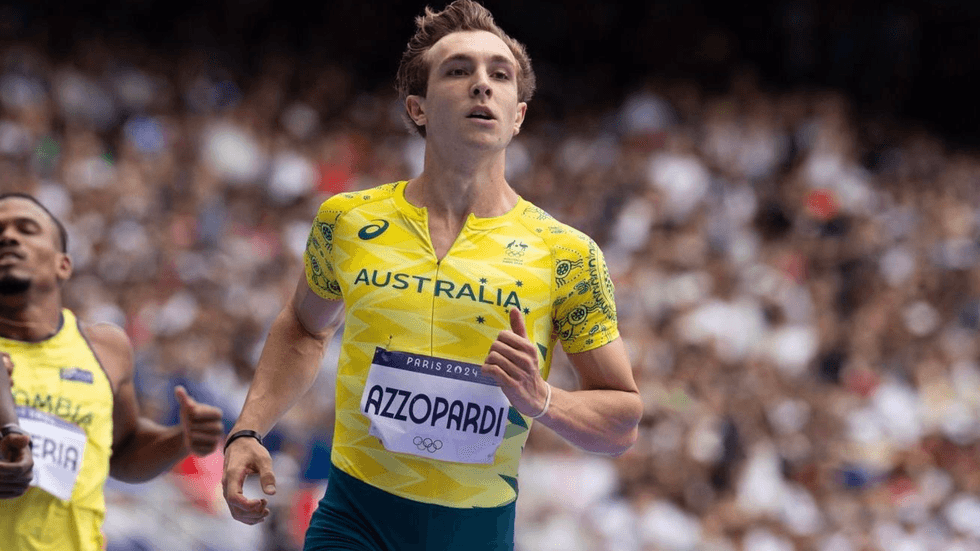 Azzopardi would like to see more sports people supported when it comes to dealing with the pressures of professional sport. Supplied: Australian Athletics'
Azzopardi, a track and field athlete, says men’s mental health is often stigmatised in sports. He gives an example of "a man coming out and saying they struggle mentally" being a "hit to their ego and [can] feel emasculating in a way".
Saab, who is a Manly Sea Eagles winger, agrees. He says fan culture can also make it challenging for young athletes to maintain healthy self-esteem when they are starting out in their career.
"The expectation increases and the demand increases," he says. "There is pressure to perform."
In 2015, Sydney researchers found that "the problem is that the culture of sport and, more broadly, notions of Australian masculinity strongly contribute to the stigma surrounding mental illness."
"They both encourage a “harden up” culture, creating an expectation that people should be able to maintain emotional stability in the face of adversity."
They found that this attitude contributes to the reluctance of acknowledging men facing adversity in sport.
Flinders University research, released in 2022 and published in the public health journal BMC, showed that "sport is a significant factor within the social construction of masculinity in males in Western culture".
These researchers say sporting bodies could help to address this stereotype of masculinity.
"The opportunity for sporting clubs to challenge stereotypical notions of masculinity could be a crucial area of influence," they say.
Their research suggests the reframing of society’s understanding of masculinity could start in places like locker rooms and training sessions.
"Reframing the meaning of masculinities through fraternal settings such as masculinised sporting environments offers a significant opportunity to redress traditional notions of masculinity and mental wellbeing within these masculinised spaces."
Unique stress
Saab understands the realities of the business side of sport, and he says it’s important for an athlete to balance the good and the bad that comes with professional sports.
"Fifty per cent of it is understanding that [being resilient to criticism and backlash]," he says.
The rest is understanding that "it is healthy to talk about things if you need to," he says.
"Whether you talk to someone or whether you don't talk to someone about your problems, it's coming no matter what."
He says professional athletes must utilise mental health services to help them battle the adversity that comes with their careers.
And he called for more conversation about men’s mental health when dealing with the pressure that comes with a performance-based business like professional sport.
Help is available
Both athletes say there is help and support on offer, but many sports people don't know what's available.
"We have very good wellbeing people from Athletics Australia, but a lot of people may not understand that they do have those kinds of people," Azzopardi says.
"They are doing a lot more than what they were in the past," he says.
Saab credits the NRL for giving players the resources to address mental health concerns they may experience.
"The NRL is implementing a few things around mental health as well, which is mainly giving players the access to whatever help they need," he says.
He says he felt organisations such as Gotcha4Life, a foundation that focuses on mental fitness, have helped him and others significantly.
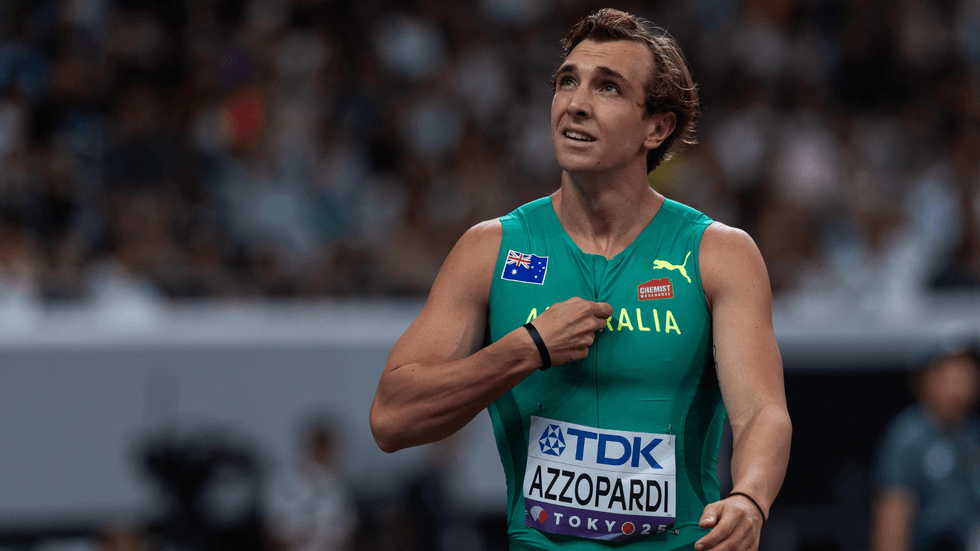 Azzopardi says there is help available for those athletes dealing with mental health issues. Supplied: Oceania Athletics
Both Azzopardi and Saab say it’s important that athletes know that support is available.
"A lot of young athletes can hopefully learn that it is not the be-all and end-all if you have a bad performance; likewise with good performance," Azzopardi says.
"I think it will be good if we have little workshops and stuff where people are comfortable talking about their feelings and comfortable knowing that people are there for them."
If you need someone to talk to, please call:
Lifeline on 13 11 14
Kids Helpline on 1800 551 800
MensLine Australia on 1300 789 978
Suicide Call Back Service on 1300 659 467
Beyond Blue on 1300 22 46 36
Headspace on 1800 650 890