

As mixed-race Asians prepare to gather in Hyde Park, a question first raised in New York is following them to Sydney: what counts as Asian enough?
Natalie Purdon, a third-year economics student, remembers not understanding her grandparents when she was growing up.
As someone who’s half-Chinese and half-Australian, she often felt caught between two cultures she couldn’t quite claim as her own when she was young.
"With my white side, it felt like I was different, or not fully like them," Purdon says.
Her Chinese grandparents don’t speak English, while she only speaks Cantonese at a basic level, making even simple conversation difficult.
"There was a language barrier with my grandparents, so it was difficult to communicate with them," she says.
On September 19, Purdon will join other mixed-Asians in Sydney’s Hyde Park, hoping to meet others with similar experiences. The sign-up page currently shows more than 100 people have registered for Sydney’s Half-Asian Meetup.
It’s the latest in a wave of so-called Wasian gatherings held across the world, after a New York event in May drew thousands.
But as the gatherings spread, so too does the backlash accusing these spaces of celebrating proximity to whiteness and sidelining those they claim to represent.
A #Wasian moment
On May 10, more than 3,500 people packed into New York’s Central Park for what organisers described as "a mass convening of the Wasians".
The event’s poster featured celebrities Conan Gray, Nico Hiraga and Laufey, who are all of white and East Asian descent.
The New York meetup arrived as mixed-race representation was having a moment in pop culture.
In April, Laufey’s Madwoman music video featured Wasian celebrities including Hudson Williams, Alysia Liu, Lola Tung and Megan Skiendel. It's since amassed more than 22 million YouTube views.
Laufey's Madwoman marked a moment of representation for the mixed-race Asian community - YouTube www.youtube.com
The video's focus on representation influenced the meetup, whose poster featured a scene from the video and the event description declaring "#Wasia is having a moment".
The gathering also coincided with Asian American and Pacific Islander (AAPI) Heritage month, celebrating their contributions and cultural influence in the United States.
Co-organiser and social media figure Niko Katsuyoshi says growing up mixed felt like "a niche identity that didn’t fully fit anywhere."
However, while the event promised to be the "biggest crowd of Wasians in NYC ever", the promotional material also insisted it was "open for EVERYONE to come support".
In a recent research study, sociologist Rebecca Chiyoko King-O’Riain defined Wasian as "a new expression of mixed-race Asian identity" and was typically used to describe people of East Asian and White descent.
King-O’Riain further explains this identity has "emerged relatively quickly, largely spread and institutionalised through social media."
On TikTok, the hashtag #wasian has racked up roughly 215,000 posts, transforming a label for an underrepresented community into a growing digital trend.
Everyone's welcome
Now it’s Sydney’s turn and Sebastian Tew is the reason why the city has its own meetup.
The 19-year-old co-organiser is a Melbourne-born videographer, the son of an Australian mother and Malaysian Chinese father, who watched the earlier meetups unfold online.
Melbourne held a meetup in June, but Tew wanted to bring one to Sydney and create a space for its half-Asian community.
"I felt that a Sydney addition would be perfect," he says, pointing to the city’s cultural diversity and large Asian population as the deciding factor.
There’s a personal reason behind the event too. His own experience of being mixed race, he says, followed a familiar script.
"Growing up mixed is an experience due to the classic story of how it’s always ‘too white to be Asian and too Asian to be white’," he says.
But the videographer is wary of leaning into that line too hard. "I know that out there people go through life with many more challenges," he says.
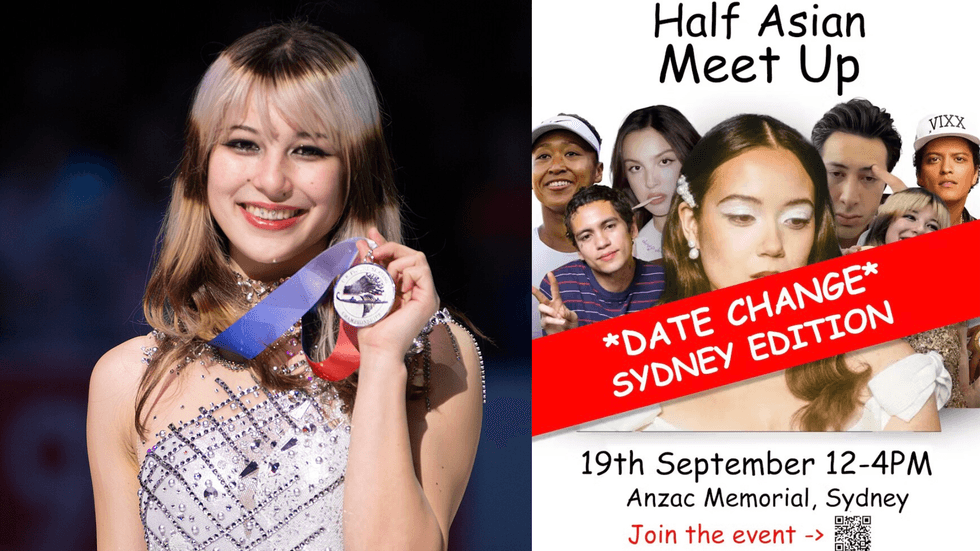 Sydney's meetup is open to everyone who is interested in attending Shutterstock; supplied
He’s candid about the criticism that followed the New York event.
"Labels such as Wasian, while not the intent, end up excluding groups of people," Tew admits.
"The goal for us is to ensure that everyone is welcome and included."
The promotional material for Sydney’s Half-Asian Meetup backs that up, at least in part.
It features Naomi Osaka, who is half-Haitian and half-Japanese, and Dominic Fike, who is part-Filipino, Haitian and African American, alongside more familiar Wasian faces like Alysa Liu and Hudson Williams.
Understanding identity
Online, the response to the Wasian meetup trend has been far less forgiving.
TikTok creator Suyuscope, who focuses on social commentary within the mixed-Asian community, argues that Wasian representation has left little room for others in the conversation.
"The only mixed-race Asian representation that exists on this scale is Wasian representation," she says.
"The closer to whiteness you are in your mixed identity and in your appearance, the more legible and accepted your mixed identity is going to be."
This idea has deep roots. In a 2020 paper, Monash researcher Karim Bettache attributes this to colourist ideals that pre-existed in Asia for centuries, tied to class hierarchies where fair skin signals nobility.
Amplified by globalisation and social media, those ideals persist today, shaping which versions of so-called Asianness get recognised and which get overlooked.
It’s part of a wider pattern Dr Tisha Dejmanee has spent years unpacking.
The senior lecturer in Digital and Social Media at Sydney’s University of Technology focuses her research on how Asian-Australians articulate identity online.
And she isn’t convinced the backlash is really about one event.
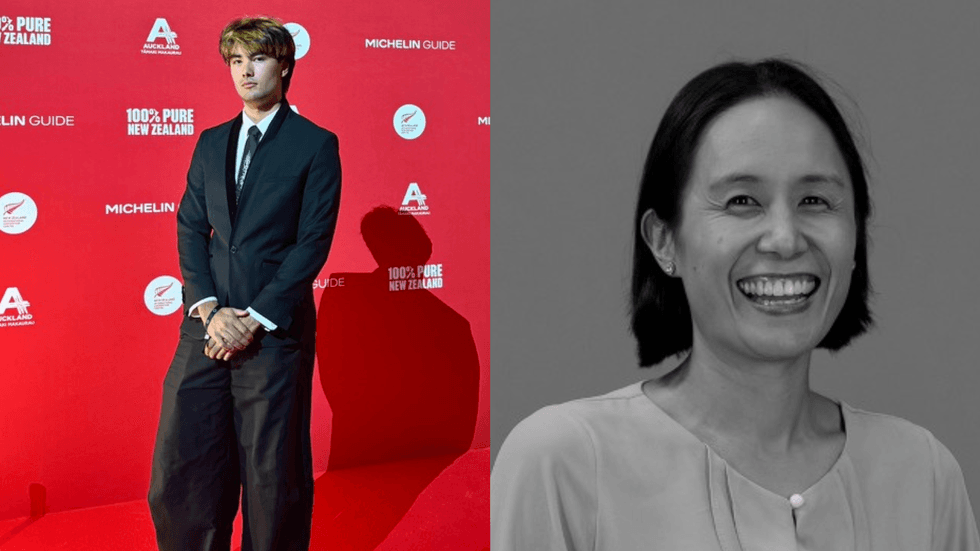 Event organiser Sebastian Tew wanted to bring the meetup to Sydney; while Dr Tisha Dejmanee says open membership is the way to go with events like this Supplied
"Any time you try and define an identity, you’re inherently going to find a problem, because the way we understand identity categories is that there’s a border around them," Dejmanee says.
"Whenever you have a border, you’re going to find people that feel excluded or are fighting for recognition."
Narrowing the category further, she argues, only further contributes to exclusion.
"Racial dynamics in Australia are all about white supremacy and colonialism. I don’t see how Wasian meetups get us any closer to those fundamental facts," the senior lecturer says.
When asked what the organisers could do differently, her answer is direct.
"They’d need to reimagine from the ground up what they’re actually trying to do," she says.
"If the movement wants to be self-reflective about race in any capacity, I think open membership is the way to go."
Purdon thinks the Sydney event organisers may already be listening. "The Sydney event seems to be more inclusive so far," she says.
And whether the actual Hyde Park event actually reflects that broader membership depends on who shows up on the day.
"It could potentially have a negative effect on how mixed-Asians are talked about, depending on the turnout," Purdon says.
"But I hope this event will help mixed Asians see that there are many other people like them also living in Sydney."