

More young people are joining run clubs to overcome loneliness. But for some, running can overwhelm their lives and impact their relationships, social lives and mental health
On October 11, I finished the 42.2km Melbourne Marathon. Earlier this year, I also ran the Canberra and Gold Coast Marathons. According to my Strava app, I’ve covered more than 2,000 km, including training, so far this year.
Yet "run-flation" – the normalisation of extraordinary athleticism on social media, from demanding training schedules to extensive shoe collections – has contributed to the unhealthy expectations I set myself, often to the detriment of my mental health and my relationships.
What started as a hobby in 2024, when I moved to Sydney and joined my university’s running society to make friends, has become a passion. It’s something many other young women can probably relate to.
According to the Melbourne Marathon Ballot results, I was one of more than 20,900 females racing either the half or full marathon. The marathon capacity has increased by 43 per cent since last year, making it the largest field in the event’s history.
This isn’t just an Australian phenomenon: the Guardian reported that a third of over a million applicants for the London Marathon were aged between 18 and 29, and the majority within this category were female. Alongside this, Fitt Insider reported women aged 25 to 29 were the largest age group of finishers at the 2025 New York Marathon.
So why has it become so popular with young women?
One reason could be that running is often described as an antidepressant and more young women like me are taking it up to counter loneliness and connect to others.
Recent University of Sydney research found social isolation has nearly doubled over the past 23 years, with younger adults experiencing the most substantial increases in loneliness.
The 23-year-long study by the International Journal of Epidemiology revealed Australians are having fewer social connections and interactions than in previous years, which senior author Professor Melody Ding says should be treated as a public health issue.
But as I reflect on my own mental health fluctuations, I realise the reality of running is far from the fun, social, healthy outlet "run-fluencers" make it out to be.
The isolation of training
Marathon training can be incredibly isolating. I cannot count the number of plans I have bailed on or declined due to my training schedules. For example, in April I left my friend’s 21st birthday party early so I could prepare for an 18km long run the next morning as part of my training for the Canberra marathon.
Occupational balance, as defined by Flinders University PhD candidate Jamie Wilson, is the way an athlete distributes their time across sport, education, work, leisure and rest and how this powerful force shapes their mental health.
"When a passion once pursued for fun begins to consume every waking hour, young athletes face heightened risks for poor mental health and wellbeing, both now and in the future," Wilson says.
With all this training, although my running performance has excelled, I have never felt more disconnected from my peers.
For example, one Saturday morning I was finishing a long run on George Street as I passed people my age heading home after a night out. Despite feeling accomplished, I regretfully thought of the fun nights out with friends I was missing to pursue my running goals.
And it’s more than my social life that suffered. After work began to negatively impact my performance, I resigned and found a new job that fitted into my running schedule.
Not the cure to loneliness
In July I realised just how much running had consumed my life after completing the Gold Coast marathon.
I crossed the finish line in three hours and nine minutes. It was easily one of my greatest accomplishments, but instead of triumph, I broke down in a hysterical fit of tears, overcome by exhaustion, shock and adrenaline.
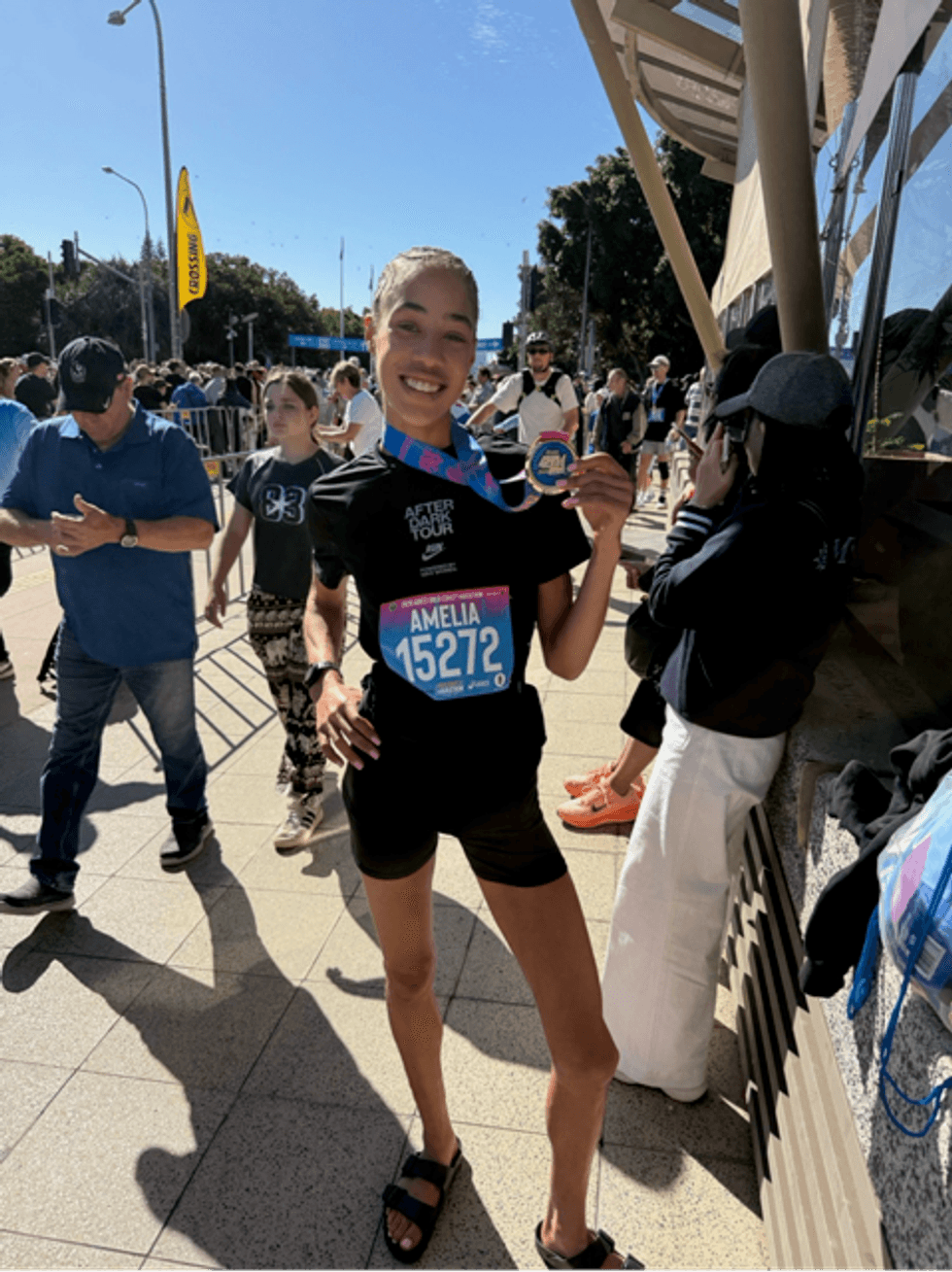 Amelia ran one of her best times during the marathon. Supplied
My friends couldn’t reach me for an hour and a half after the race finished. They were stuck on the other side of the course and had to wait for a gap in the sea of over 17,000 runners before they could cross to meet me.
As I waited, I rang my mum, crying that this was one of the best days of my life as I had accomplished something important that I would remember forever.
Yet, I felt incredibly lonely as there was no one around to celebrate with me.
When I was finally able to hug my friends, I realised that this success meant nothing to me without celebrating it with loved ones.
What really matters
The Kohler effect, documented in sports psychology, suggests that running alongside faster runners can make you faster.
When I join my training group on the oval at 6am every Tuesday, scroll through the results after a big running event, or watch my favourite professional runners’ YouTube videos, I stay motivated while also normalising elite levels of human endurance and stamina.
But when my body is screaming for rest or I’m feeling burnt out from university assignments, it can feel excruciatingly punishing to try to reach the efforts of runners around me.
And I struggle to recognise when I need to prioritise recovery before trying to increase my fitness.
I do post about my running success on my socials. But unlike most online information circulating about running and mental health, I’m not trying to sell anyone a new matching running set, a shoe to make you faster, or even offer advice. Despite how much I run, I’m not a run coach or a professional runner.
I love running, and I want to run for a long time, but I’ve realised that in order to continue to run, I need to deprioritise running.
This means choosing a long walk and coffee catch-up with a friend, going to the movies with my Mum and saying yes to nights out, instead of going for a run. Finally I’m realising that social connection is the true cure for loneliness.