


Community language schools help their students connect to their heritage and identity, while helping to combat xenophobia in the wider community
Busra Kumsuz was seven years old when she began attending Turkish language school in Marrickville. The now 20 year old law student remembers feeling nervous that she would get things wrong, saying she wasn’t very good at" speaking Turkish, but she enjoyed the classes.
"It felt like I had a community. That was probably the first time that I felt like there were other Turkish Australians," she said.
"Before class every morning we would sing the Turkish national anthem together. It definitely made me feel more Turkish."
The proportion of students in New South Wales from a language background other than English has increased over the past decade, rising from 32.3 per cent in 2015 to 40 per cent in 2025, according to the New South Wales Department of Education.
But while multilingualism is rising, support for it is not.
A 2026 Lowy Institute poll of more than 2,000 Australian residents found that while 73 per cent support cultural diversity, it's down from 90 per cent in 2024.
However community language schools continue to play an important role in the lives of many, according to Ken Cruickshank, a University of Sydney Professor and Director of the Sydney Institute for Community Languages Education.
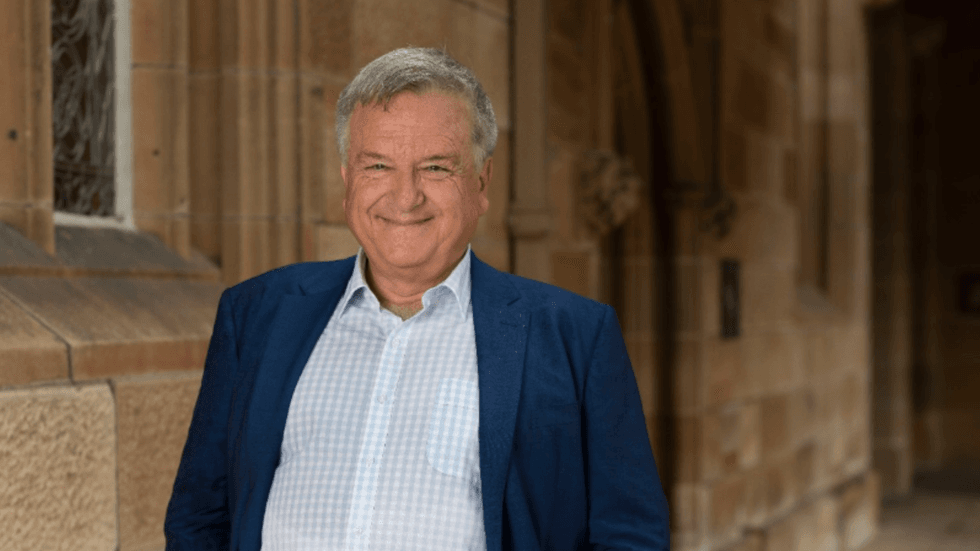 Professor Ken Cruikshank says community language schools can help children been more confident in who they are. Supplied
There are almost 800 community languages schools in Australia, with more than 300 in NSW, according to Community Languages Australia. And the education department estimates that more than 36,000 students attend these schools on top of their existing school obligations.
"In every area where there has been migration, you will find schools," Cruickshank said. "Wherever you have got migrant communities, they want their kids to keep their language."
Cruickshank said that community language schools are important in combating xenophobia, now more than ever.
"When kids are aware of their heritage, culture and language, they’re much less racist and much more open and accepting, because they are confident in who they are," the university professor said.
Part of the reason why participation in community language schools has been sustained is due to cultural commitment over generations.
"[For example] the Greek community is a really old community [in Australia] and yet the kids are still going, [the] second, third, fourth generation are still going to the schools," Cruickshank said.
University of Sydney research indicates that the rate of generational language maintenance is 80 per cent for the Greek community, as well as Turkish and Vietnamese communities.
Cruikshank has interviewed many attendees of community language schools for the University of Sydney research.
He said some students dreaded attending, as they often operate on the weekends and many students went before they are 10 years old at the behest of their parents. In fact, when asked what could be done to improve the schools, one student suggested the government "shut them all down!"
But despite some students’ disdain for attending the schools, Cruickshank said when they were asked if they would send their own children to such schools, the response was enthusiastic.
"‘Oh yes, of course!’ they said."
 Many of those who attend community language schools would like to see their own children learn their home languages. Shutterstock
Busra Kumsuz said she would send her children to a Turkish language school.
"It would be good for my kids to know their mother tongue," she said. She only attended Turkish school for about nine months and always wished she’d continued. "It is something I regret not pursuing."
"The more Turkish I am able to speak, the more I feel like I can say ‘hey I’m Turkish!’ and feel more comfortable around other Turkish people."
"Basically everyone in Turkish society went to language school growing up," she said.
She said language schools were particularly important for multiracial people, such as herself.
When she was young, parents attended some of her classes, and Kumsuz remembers observing other families like hers.
"There was one other mother who was a White Aussie lady who had married a Turkish man and my mum was an Afghan woman who had married a Turkish man and they wanted to learn Turkish with their kids," she said.
"I think [language schools] play a very big role in making kids feel comfortable around their identity no matter where they’re from."
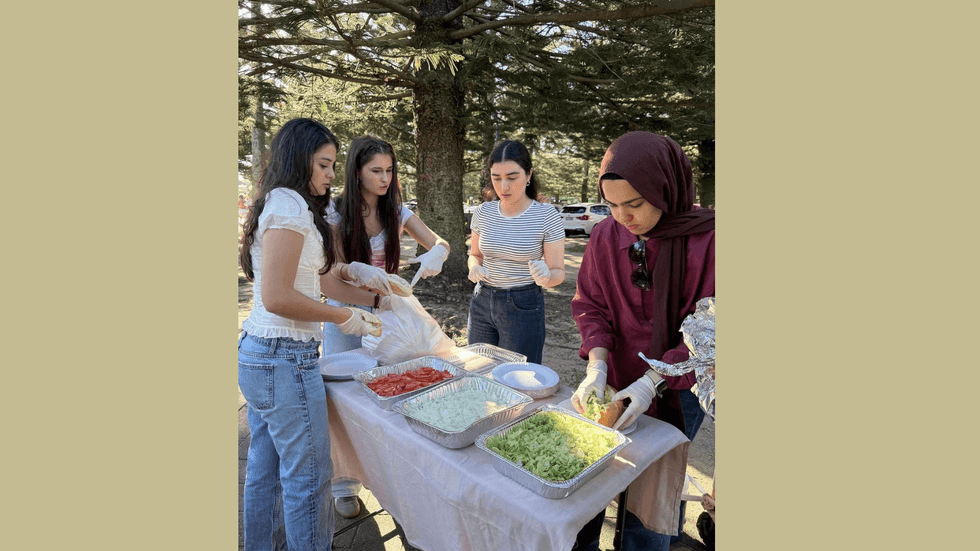 Busra Kumsuz and her friends prepare for a picnicSupplied
Amani El Demalawi, the former principal of a Birrong Arabic community language school in South-Western Sydney that's run by the Islamic Women’s Welfare Association (IWWA), agreed that these schools are important.
El Demalawi said she knew of research that showed that community language school students "gain cognitive development and improve in problem solving and cultural awareness".
Indeed a study presented at the Federation of European Neuroscience Societies conference in Barcelona earlier this year, used magnetoncephalography to measure the brain activity of 728 people of different backgrounds.
It found that those who study another language have brains that are six years younger than the brains of those who know only one language.
The former principal has seen an increase in the support for community language schools over time.
"In the last five to six years, I have found that the parents are really encouraging their kids," she said.
"Language is expanding [and] the Department of Education is actually trying to help in so many ways," El Damalawi said.
Recently the federal government introduced culturally specific programs. Notably, a $2.5 million program launched earlier this year will be implemented in NSW, Victoria and the ACT to improve community language schools teaching 15 Asian languages including Punjabi, Mandarin and Indonesian. The grants will focus on curriculum development, staffing and retention.
State government funding of community language schools has also been maintained, with the NSW education department offering grants of up to $2,500 for existing language schools and $10,000 to start up new language schools.
And Cruickshank said a series of curriculum and structural changes have been introduced state-wide, including "trying to get more second generation kids as teachers".
"Australia is one of the few countries in the world that provides funding for community language schools. Not for any altruistic reasons, they think they are buying votes," he said.
Amani El Damalawi said that while attitudes around diversity waver, the commitment of communities to educating young people in their mother tongue has not. She said community language schools are important safeguards for cultural identity.
"The only tool we have is to teach the kids Arabic, otherwise, it’s going to be forgotten and the culture is not going to be there anymore," she said.