

The recent closure of numerous live music venues in Sydney takes away important spaces for community connection and the development of musical talent
Later this month the iconic Sydney music venue MoshPit will shut its doors after nine years.
The venue’s team announced the decision on Instagram in July, saying that "ever-increasing operating costs, combined with declining revenues, have made it financially impossible for us to continue."
Since it opened in May 2017, the Erskineville venue has served as a launchpad for many up-and-coming musicians. In 2024 alone, the 100-capacity venue welcomed more than 800 bands to their small stage.
Its closure is a particular loss for Sydney's young audiences, as these venues serving as rare and valuable third spaces essential for connection.
And with hundreds of venues shutting in the last decade, questions have been raised as to how and where the next generation will experience live music.
The costs of running a music venue
Despite MoshPit’s imminent closure, the venue continues to draw substantial crowds.
"Getting people through the door has never been a problem for us … people just aren’t spending as much as they used to," says co-owner Gary O’Rourke
"The only way we make any money is through bar sales, and once bar sales fall, then that's it," he says.
"We’ve got nothing else to offer other than the venue, good music, a good sound system and cheap drinks."
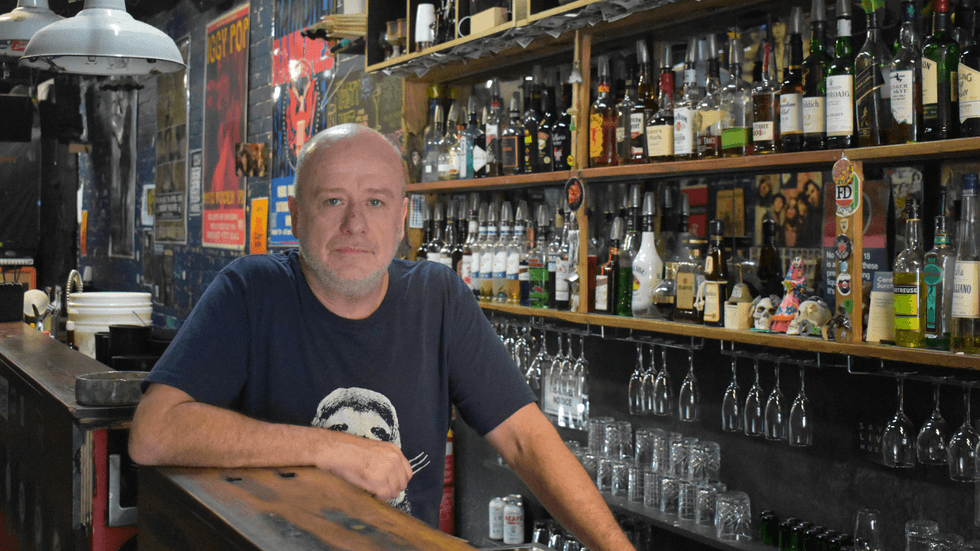 Co-owner Gary O’Rourke said that running the venue he has been part of for years is “just not sustainable anymore”Photography: Zac Lorist
Dr. Sam Whiting, who studies cultural economics and creative industries says running small venues like MoshPit come alongside high operational costs.
"Rent and often staff are the biggest overheads," says Whiting. "You've also got things like insurance, a particularly costly matter in Australia."
The 60-year-old O’Rourke says rising alcohol, petrol prices and customers' decreased spending habits are the key reasons for increased expenses.
"A lot of uni students come in to see bands … they’re not stacked with cash," O’Rourke says.
"And the [older] crowd that are my age … they're watching what they're spending too."
Whiting agrees, saying the traditional model of relying on drink sales in music venues is "a very unreliable source of revenue" when patrons are drinking less.
The MoshPit team has tried to find other revenue streams. These have included applying for government grants, live streaming performances, and hunting for discounted alcohol or soft drinks. O'Rourke even considered a GoFundMe.
However he believes MoshPit will be in the same financial situation in a year, so they would be "delaying the inevitable".
Their closure comes as many other small Sydney venues struggle with increased living costs.
Submissions to the NSW live music inquiry reported a net loss of nearly 1,000 live music venues across NSW since 2014.
Earlier this year, Sydney venues Mary’s Underground and Lazy Thinking both shut their doors.
"The venue loses money every month it’s open. That’s never changed," Lazy Thinking owner Jim Flannigan said in a social media post in August.
Similar sentiments were shared by Mary’s Underground, who said:
"It will come as no surprise that this [closure] is ultimately due to financial reasons".
Why music venues matter
Venues like MoshPit are integral for young communities and they are often an important stepping stones for emerging bands.
"A lot of people have their first gig at Mosh Pit," says Jacqui, the guitarist and vocalist of punk band So I Says to Mabel, which regularly plays at the venue.
She says small venues like MoshPit are "a place where young bands can get their stripes".
Thomas Button, an 18-year-old guitarist who regularly plays and attends gigs at the small venue agrees.
"The supportive vibe is so amazing … other places can be so intimidating.
When asked how he felt about the loss of the venue, he said: "There's no other place like it … these places are so special, but they just can’t continue."
Theo Fernandez, the drummer of Sydney band Failsafe, says growing up within a thriving local music scene has been beneficial for his emotional wellbeing.
"Music is love, and that love needs to be shared … the sense of community, the sense of inclusivity, especially in a young mind, makes growing up a very safe space," he says.
 Theo Fernandez says there are countless benefits to being part of a thriving local music scene.Photography: Zac Lorist
Whiting agrees. "I don't think it can be understated how important, in a digital age, it is to meet like-minded people who have shared interests."
These venues are also integral in promoting the craft of music making and encouraging youth into creative industries.
"Without the grassroots venues model, we lose that pipeline from small to medium venues to large venues," Whiting says.
O’Rourke understands the deeper significance of the venue.
"I always tell people who are nervous to perform, ‘This is such a supportive place to come and play," he says.
"And next week they are here with their guitar, and then six months later they’ve met people in here, and they’re bands performing … and I think ‘F**k, well that's what we are here for '."
Facing the music
Sam Whiting believes that small venues like MoshPit should be treated as a public good. The term describes a product or service that anyone can use without reducing its availability to others.
"I would like to have policymakers [and] the music sector believe that everyone should be able to access music and participate in musical cultures," Whiting says.
This is already happening in Western Australia, where the state lottery Lotterywest is legally required to dedicate 5 per cent of their income (around $20-25 million) to creative spaces, community arts and infrastructure.
He would also like to see for-profit venues transformed into not-for-profit venues, as he believes it could save these businesses money and help to keep their doors open.
"There are various tax breaks that venues might be able to access, lower overheads in terms of taxation on wages. If they're able to register for charitable status, they can receive tax-deductible donations," he says.
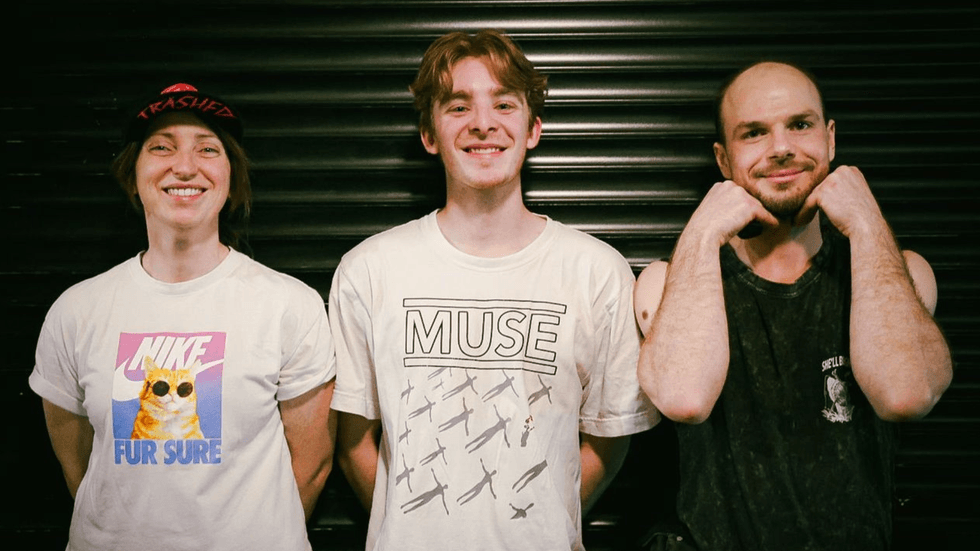 Punk band So I Says to Mabel regularly plays at MoshPit Photography: Scarlett Thompson
Whiting would like funding bodies to reconsider how they think about small venues.
"I would argue that the importance of a venue isn't linked to a profit motive or making as much money as possible.
"The importance of venues often is based on the social spaces that they provide and the kind of culture that they platform," he says.
Fernandez agrees.
"As a musician, all you want is for people to hear your music … I'm not doing it to make money … I'm doing it for the joy and the love that it brings. You don't expect money for it."
The band members all say playing music isn't a financially viable career for them, yet they still play because they believe in the culture and the community that it brings them.
O’Rourke also recognises the wider purpose of venues like MoshPit.
He says: "When people are through the door, all I want is for them to have a good time."