


The anticipation for Christopher Nolan's new film has been sky high and his adaptation of Homer's poem is impressive, but there are significant flaws
Review
The Odyssey
Rating: ★★★☆☆
As one of the biggest film events of the year, with millions of people around the world flocking to see the retelling of the near 3,000-year-old Homeric poem, Christopher Nolan’s The Odyssey is something all movie fans should see. And after the overwhelming success of Nolan’s 2023 Oscar-winning film Oppenheimer, the anticipation for this movie has been sky high.
However, while much of the discussion has been positive, there has also been outspoken criticism. A notable example was Emily Wilson, the classicist whose translation of the work was cited as a major inspiration by Nolan himself.
But after seeing it, she said: "I don’t think it’s a complicated movie. And I don’t think it’s even about a complicated man. I think it’s a quite simple action hero movie about an action hero who feels bad about being an action hero".
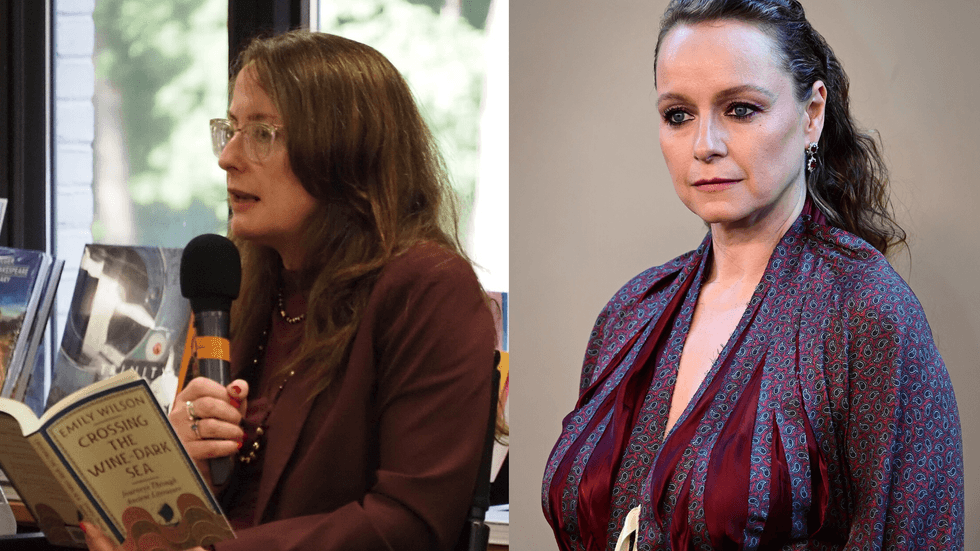 Classicist Emily Wilson has criticised the Nolan film; Samantha Morton has been praised for her portrayal of Circe in the film.Wikimedia Commons
So how do I feel about The Odyssey?
Unfortunately, I was unable to see the film in IMAX 70mm film as Nolan intended. Instead, I saw it at the Randwick Ritz on 70mm film. I am not a film snob: I think the film vs digital debate is meaningless, particularly when it comes to new productions like The Odyssey.
My only recommendation is going to a showing that has good sound, since the mixing of the movie is so loud and bassy, many normal cinemas won't be able to handle the audio and that makes for a very painful viewing experience.
The grandness and spectacle of the film is the greatest thing about it. Nolan’s aversion for digital effects means everything on screen was done physically, through complex puppetry, practical effects, and controlled demolitions.
And it is amazing to see what he has put on screen, as if he cast an actual 10-foot-tall cyclops and found a real witch to turn the men into pigs.
But at times, his commitment to practical effects makes the film disorienting visually, particularly in some combat and destruction scenes where the low lighting and editing make things tricky to track. The colour of the film is also too grey at times and, while many others have praised the film for its visuals, I feel somewhat uninterested in them.
Nolan’s brooding realist style and aesthetics often strip away some of the magic of an epic story like The Odyssey. While his style compliments stories like Oppenheimer or Dunkirk, his grounded visual and narrative style do a huge disservice to his Batman Trilogy or The Odyssey.
These stylistic features emanate from the realist tradition, modernised into blockbuster action aesthetics. Nolan’s changes to the narrative fit his style as an auteur, however his style does not necessarily complement the story and cultural tradition he is adapting.
For example, Agamemnon’s black and gold armour looks awesome but is heavily anachronistic, which contradicts Nolan’s commitment to realism. Similar cases of this show up across the film, where he changes these things in the name of realism and believability.
 Odysseus and the Cyclops Wikimedia Commons
The film is still very well put together and for me, the sacking of Troy is the standout scene. Unlike many of the other action set-pieces that involve wild chaos on a battlefield, the sacking of Troy is quiet, tense, and explosive in its climax.
The score by Ludwig Göransson during these scenes – and throughout the movie – is incredible, particularly alongside the sound design that blasts your seat in two, as if struck by a thunderbolt.
Outside of these praises, there is much I dislike about Nolan’s The Odyssey.
He can change the story as he likes, as that is the nature of adaptions. However, Nolan radically deconstructs the story in a way I find concerning. The anachronisms mentioned regarding style and set design are minor and easy to overlook, however there are many other major changes that dissolve the spirit of The Odyssey and render the film simplistic.
For example, he emphasises the Ancient Greek concept of Xenia or, as he calls it "Zeus's law", which can be generally understood as "do unto others as you would have them do unto you".
That means that, rather than Odysseus not being able to return home because of godly intervention, it becomes a story of guilt and trauma. This concept of Zeus’s law upholds the moral order and, by violating it, Odysseus disrupts the safety and stability of the world. This guilt and trauma that results from his odyssey and his role in the Trojan war is his so-called "Oppenheimer moment" as he is left in despair by destroying the home he cannot return to.
By making these changes, Nolan reduces the mythology of The Odyssey to the various beasts Odysseus encounters on the journey and cuts out almost all the gods entirely.
The only god to appear on screen is Athena, and she could also be read as an apparition of guilt, rather than a godly entity appearing to Odysseus. The guilt concept is interesting, but The Odyssey at its core is not a war story, it's a story about gods and depraved heroes. Cutting the gods out of a Greek epic insults the very culture it is adapting.
Worse, it renders this magical world into an action hero blockbuster.
Nolan seems to be obsessed with these Napoleonic stories about great men, whether it is the caped crusader or the man who built the atomic bomb – and another story about a great man facing a moral dilemma feels unoriginal and uninteresting to me.
These anachronisms continue emerging throughout the performances and screenplay. Every statement sounds rhetorical, with no constancy among the accents and direction. It is as if the movie doesn’t want you to listen too closely to what it is saying, but rather focus on how pretty and grand it feels.
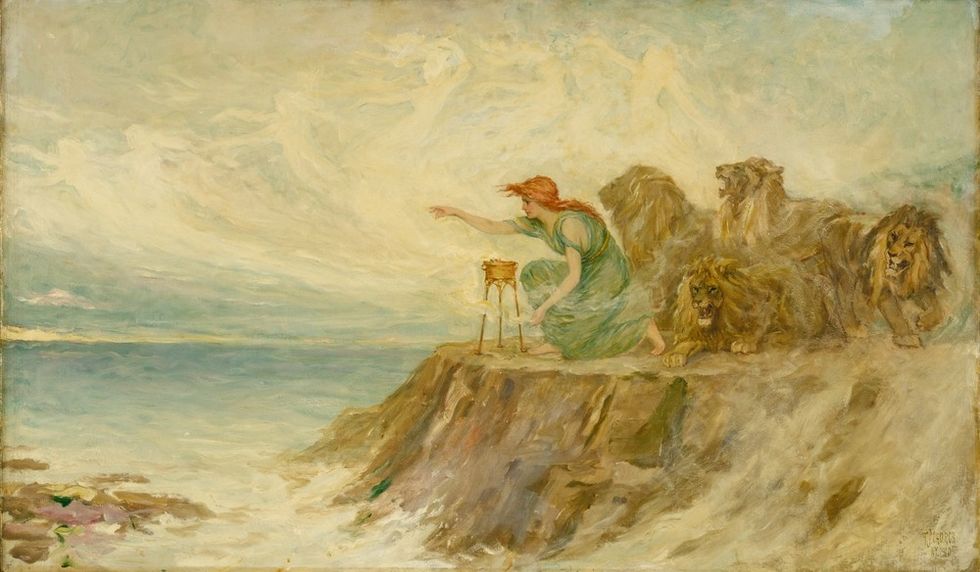 Circe, the witch who turned Odysseus's men into pigs, has often been depicted in art. Shutterstock
Excluding standout performances from actors Robert Pattinson as villainous Antinous and Zendaya as Athena, most of the performances are forgettable. They are made more mediocre from the editing, often cutting away from their expressions to show flashbacks. These flashbacks are used so often to supplement the writing and performances that it makes them feel lazy and unearned.
Politically, the narrative falls flat too, particularly in its construction of gender.
To support his revision of the narrative, Nolan often makes Odysseus more sympathetic and removes his hubris, arrogance, and brutishness. Simultaneously he weakens many female characters, particularly Circe, making these women less sympathetic in order to make Odysseus more virtuous.
These changes also illuminate a tendency in his writing to prop up his leading men in a Napoleonic fashion, to the detriment to the female characters. If Nolan were a woman, it's unlikely audiences would be so kind to overlook his flaws as a writer and filmmaker.
Finally, I think that the huge praise The Odyssey has gotten is unearned, with many people overlooking its issues in the face of its grandeur. While I still recommend people see the film, it is no more complex or necessary than the other action blockbusters it is competing with.
This is a film you should watch once on the big screen with a big bucket of popcorn, however if you want something more sophisticated, this is not for you.