Generative AI has been mainstream for nearly four years now, but I don't see that it's having a positive impact on our society
If you have to look really hard to find the benefit of something, chances are it’s not there.
That’s how I feel about Meta’s recent Instagram product release: the Muse Image AI feature.
After launching earlier this month, this product allows users to generate AI images and videos. One feature would allow users to tag public accounts and generate images based on that account’s content without their consent. There was substantial backlash to the announcement, so it’s unsurprising that Meta swiftly withdrew that feature.
As Meta’s product managers regroup, they need to consider who would use this technology. Instagram’s audience is reportedly predominantly young people, but this group is increasingly turning their back on AI. And their rejection of this feature is just the beginning.
Who is generative AI for?
If you’re young and perhaps tertiary educated, you’re likely to have seen the same news about generative AI that I have.
Yet tertiary educated young Australians are reportedly the most frequent users of generative AI.
A 2026 report titled AI Adoption in Australia by Australian National University (ANU) in partnership with Google surveyed 3,500 adult Australians.
The ANU report surveyed thousands of Australians about their AI usage. Supplied
The study found 49 per cent of those aged 18-34 reported a positive or very positive perception of generative AI, and for Australians with degrees, this perception was over half (52.2 per cent).
Almost 14 million Australians use AI tools, including 10.5 million users of ChatGPT. The 25-34 and 14-17 demographics were the most significant users of ChatGPT, with 62 per cent and 59 per cent respectively.
Allegra Spender, the federal MP for Wentworth in Sydney, has been watching the debate around AI closely.
She told Newsworthy that many young people had told her they were already using generative AI for work, study and personal purposes.
“A lot of them are really excited about what it can do,” she said.
Yet it wasn’t all good. “I know many are also worried about whether they can trust what they see and read online, what it means for jobs, privacy, and safety,” she said.
And she’d noted concerns from university students about what it means for their careers.
MP Allegra Spender has been listening closely to the AI discussion. Supplied
Young people don’t care about AI
US research shows that negative attitudes among generation Z toward AI increased from 2025 to 2026, with anger growing from 22 per cent to 31 per cent while anxiety remained virtually the same. Excitement dropped from 36 per cent to 22 per cent, as did hopefulness from 27 per cent to 18 per cent.
A Pew Research study found roughly half of the surveyed adults under 30 believed AI will be harmful to society, with only 14 per cent believing it would be positive. Four in 10 of this group were also more likely to think AI would be negative for them, specifically.
There are also concerns about what the technology does to critical thinking.
More than half of Australians in ANU’s study said it would weaken their critical thinking skills, and 65.8 per cent said they had personal data and privacy issues with AI.
Spender said she has witnessed concern at local primary and high schools about non-consensual deepfakes, something that particularly affects women.
She’s also seen concern from the creative community about “having their work used to train AI without consent and compensation.
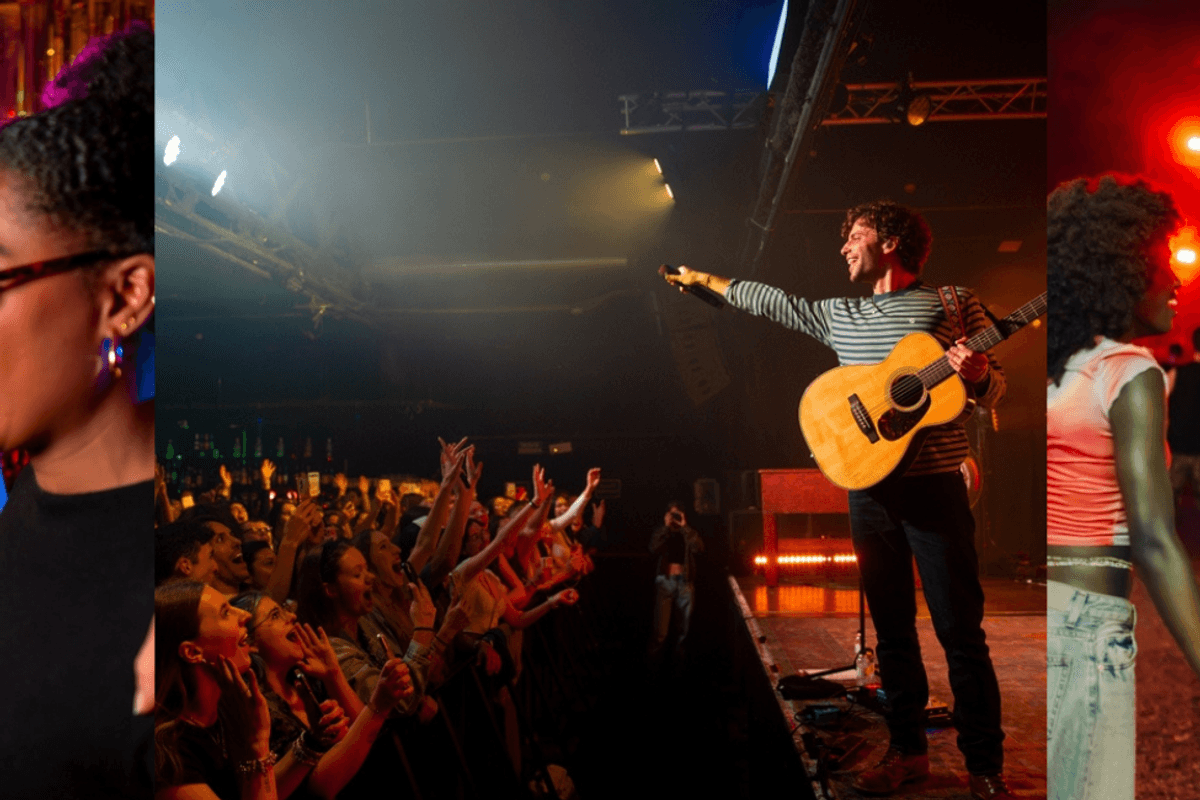
An AI-generated artist recently played at a Sydney venue, much to the audience's horror. Shutterstock
This was reflected in the recent outrage over an AI-generated artist who played a show at Bootleggers in Newtown, Sydney.
A reel posted about the affair gained over 300,000 views and close to 1,000 comments including: “Top job calling this out this is feral,” and “AI shouldn’t have any place in any creative arts.”
The booking agency, Good Intent, immediately apologised. A comment from the venue Bootleggers on this post read: “We don’t support AI, we support genuine artists."
“To me, generative AI feels less like innovation than a symptom of a broader cultural and economic rot. If I could snap my fingers and make [it] disappear forever, I probably would.”
And in May, CBS News reported that graduation speakers at US universities received loud boos from Gen Z graduates when they mentioned AI. The speakers included real estate executive Gloria Caulfield and former Google CEO Eric Schmidt.
Seamus Byrne, a technology journalist and AI researcher has seen the pushback from young people directly.
He said young people he’d spoken to “are eager to find and support real artists doing real work” and “can be pretty vocal when they think they're being fed AI without disclosure.
“[And] in the general online social spaces, it [seems] like there is more opposition today than a year ago.”
Researcher Seamus Byrne believes attitudes toward AI have shifted quickly.Supplied
When it came to the Muse debacle, he said the reasoning behind the user tag feature wasn’t clear. “It's hard to see who exactly Meta designed Muse AI for other than Meta itself,” he added. He speculated inspiration may have come from OpenAI’s short-lived, social media-style app Sora.
So what is going on here?
It seems that despite contrary statistical evidence, there are negative attitudes among younger generations toward AI. Meta’s use of a feature that revolved around non-consensual image generation as a selling point for a “useful creative tool” directly contradicted privacy concerns and feelings of anger. So what might they have been hoping to achieve?
The positive uses of AI
Byrne said AI technology is most often used “in a social media and small business context,” such as making flyers or signs, as well as for humorous purposes in group chats.
“The pitch for this kind of technology is very much [its] efficiency. It is fast to make things,” he says.
Small to medium enterprises (SMEs) comprise the majority of businesses in Australia. And according to a recent NAB survey, more than 42 per cent of SMEs use AI. However, 44 per cent of them have no plans to implement the technology.
Yet the most commonly cited positive use of generative AI is that it boosts productivity.
ANU’s study found that 72.2 per cent of Australians self-reported generative AI saved them time, with 63.2 per cent agreeing it created more personal time.
But there is complex evidence behind this.
For example, Harvard Business School research found when two people were assigned AI to do tasks, they performed as well as those who weren’t assigned it. And a global study by The Upwork Research Institute found 77 per cent of workers reported that AI increased workload and in fact decreased productivity.
Last year, Commonwealth Bank was forced to backtrack and apologise to 45 sacked customer service staff members who were replaced with AI, when it became clear that calls increased.
Multiple negative uses
Generative AI’s many nefarious uses are easy to find. For example, it’s frequently used for child sexual exploitation and abuse, where image generation is used to depict children in sexually explicit acts, among other things.
US research found that reports of AI-aided sexual abuse increased from 4,300 in 2023 to 67,000 in 2024. In Australia, 1 in 25 teens have experienced or know someone who has experienced AI sexual abuse.
Generative AI has also been used in ugly political battles.
For example, US President Donald Trump attacked former president Barack Obama and Michelle Obama by depicting them as monkeys; mocked Catholics by generating images of himself as the Pope; and insulted Christians by imagining himself as Jesus. Similarly Iran has released sophisticated LEGO-themed AI videos about the US-Iran war, feeding misinformation.
Textual generation is no better. In 2025, consultancy firm Deloitte was slammed for generating a report for the federal government containing bogus citations. These included false academic references, non-existent speeches, and legislation.
Additionally, in 2025, a Victorian lawyer relied on AI that hallucinated false cases. As a result, he lost his licence to practice as a principal lawyer.
So what’s the point?
It's been nearly four years since generative AI took off, and positive reports have been limited.
While there are some benefits including medical breakthroughs and some minimal increases in productivity, the conveniences it offers within its most popular uses are cancelled out by its unreliability and tendency to hallucinate.
Self-reported productivity benefits are one thing, but they don’t warrant features like non-consensual image generation. And the creation of another AI tool without prevention of the negative uses only fuels them.
Meta’s product creators should consider how it will address these issues if they intend to appeal to young people.
I am not interested in generative AI: so far, it hasn’t actually invented anything and the negatives grow with each development, so careful consideration of its wholesale implementation is necessary.
Unless someone can demonstrate that generative AI has a purpose that doesn’t breach artists’ intellectual property, contribute to severe environmental damage, or have high risks of factual inaccuracy, it’s not worth touching.
Lilya Murray is a first-year Juris Doctor student at UNSW. She has a bachelor's degree in media with a major in communications and journalism. You can find her listening to music or reading a book, in which case you won’t find her.









Generative AI has been mainstream for nearly four years now, but I don't see that it's having a positive impact on our society
If you have to look really hard to find the benefit of something, chances are it’s not there.
That’s how I feel about Meta’s recent Instagram product release: the Muse Image AI feature.
After launching earlier this month, this product allows users to generate AI images and videos. One feature would allow users to tag public accounts and generate images based on that account’s content without their consent. There was substantial backlash to the announcement, so it’s unsurprising that Meta swiftly withdrew that feature.
As Meta’s product managers regroup, they need to consider who would use this technology. Instagram’s audience is reportedly predominantly young people, but this group is increasingly turning their back on AI. And their rejection of this feature is just the beginning.
Who is generative AI for?
If you’re young and perhaps tertiary educated, you’re likely to have seen the same news about generative AI that I have.
Reports have shown that it hallucinates text and statistics, it’s imposing horrors on the environment, it’s invading art with no regard for intellectual property, it’s fuelling misinformation, it’s causing serious mental health issues, and making people dumber.
A 2026 report titled AI Adoption in Australia by Australian National University (ANU) in partnership with Google surveyed 3,500 adult Australians.
The study found 49 per cent of those aged 18-34 reported a positive or very positive perception of generative AI, and for Australians with degrees, this perception was over half (52.2 per cent).
Almost 14 million Australians use AI tools, including 10.5 million users of ChatGPT. The 25-34 and 14-17 demographics were the most significant users of ChatGPT, with 62 per cent and 59 per cent respectively.
Allegra Spender, the federal MP for Wentworth in Sydney, has been watching the debate around AI closely.
She told Newsworthy that many young people had told her they were already using generative AI for work, study and personal purposes.
Yet it wasn’t all good. “I know many are also worried about whether they can trust what they see and read online, what it means for jobs, privacy, and safety,” she said.
And she’d noted concerns from university students about what it means for their careers.
Young people don’t care about AI
US research shows that negative attitudes among generation Z toward AI increased from 2025 to 2026, with anger growing from 22 per cent to 31 per cent while anxiety remained virtually the same. Excitement dropped from 36 per cent to 22 per cent, as did hopefulness from 27 per cent to 18 per cent.
A Pew Research study found roughly half of the surveyed adults under 30 believed AI will be harmful to society, with only 14 per cent believing it would be positive. Four in 10 of this group were also more likely to think AI would be negative for them, specifically.
More than half of Australians in ANU’s study said it would weaken their critical thinking skills, and 65.8 per cent said they had personal data and privacy issues with AI.
Spender said she has witnessed concern at local primary and high schools about non-consensual deepfakes, something that particularly affects women.
She’s also seen concern from the creative community about “having their work used to train AI without consent and compensation.
This was reflected in the recent outrage over an AI-generated artist who played a show at Bootleggers in Newtown, Sydney.
A reel posted about the affair gained over 300,000 views and close to 1,000 comments including: “Top job calling this out this is feral,” and “AI shouldn’t have any place in any creative arts.”
The booking agency, Good Intent, immediately apologised. A comment from the venue Bootleggers on this post read: “We don’t support AI, we support genuine artists."
Kane Parsons, the 21-year-old director of the recent record-breaking horror film Backrooms, dismissed generative AI in an interview with The Australian.
And in May, CBS News reported that graduation speakers at US universities received loud boos from Gen Z graduates when they mentioned AI. The speakers included real estate executive Gloria Caulfield and former Google CEO Eric Schmidt.
Seamus Byrne, a technology journalist and AI researcher has seen the pushback from young people directly.
He said young people he’d spoken to “are eager to find and support real artists doing real work” and “can be pretty vocal when they think they're being fed AI without disclosure.
When it came to the Muse debacle, he said the reasoning behind the user tag feature wasn’t clear. “It's hard to see who exactly Meta designed Muse AI for other than Meta itself,” he added. He speculated inspiration may have come from OpenAI’s short-lived, social media-style app Sora.
It seems that despite contrary statistical evidence, there are negative attitudes among younger generations toward AI. Meta’s use of a feature that revolved around non-consensual image generation as a selling point for a “useful creative tool” directly contradicted privacy concerns and feelings of anger. So what might they have been hoping to achieve?
The positive uses of AI
Byrne said AI technology is most often used “in a social media and small business context,” such as making flyers or signs, as well as for humorous purposes in group chats.
“The pitch for this kind of technology is very much [its] efficiency. It is fast to make things,” he says.
Small to medium enterprises (SMEs) comprise the majority of businesses in Australia. And according to a recent NAB survey, more than 42 per cent of SMEs use AI. However, 44 per cent of them have no plans to implement the technology.
AI has been notably instrumental in medical breakthroughs and it can quickly simplify complex data sets (albeit subject to error).
ANU’s study found that 72.2 per cent of Australians self-reported generative AI saved them time, with 63.2 per cent agreeing it created more personal time.
But there is complex evidence behind this.
For example, Harvard Business School research found when two people were assigned AI to do tasks, they performed as well as those who weren’t assigned it. And a global study by The Upwork Research Institute found 77 per cent of workers reported that AI increased workload and in fact decreased productivity.
Last year, Commonwealth Bank was forced to backtrack and apologise to 45 sacked customer service staff members who were replaced with AI, when it became clear that calls increased.
Multiple negative uses
Generative AI’s many nefarious uses are easy to find. For example, it’s frequently used for child sexual exploitation and abuse, where image generation is used to depict children in sexually explicit acts, among other things.
US research found that reports of AI-aided sexual abuse increased from 4,300 in 2023 to 67,000 in 2024. In Australia, 1 in 25 teens have experienced or know someone who has experienced AI sexual abuse.
For example, US President Donald Trump attacked former president Barack Obama and Michelle Obama by depicting them as monkeys; mocked Catholics by generating images of himself as the Pope; and insulted Christians by imagining himself as Jesus. Similarly Iran has released sophisticated LEGO-themed AI videos about the US-Iran war, feeding misinformation.
Textual generation is no better. In 2025, consultancy firm Deloitte was slammed for generating a report for the federal government containing bogus citations. These included false academic references, non-existent speeches, and legislation.
Additionally, in 2025, a Victorian lawyer relied on AI that hallucinated false cases. As a result, he lost his licence to practice as a principal lawyer.
So what’s the point?
It's been nearly four years since generative AI took off, and positive reports have been limited.
While there are some benefits including medical breakthroughs and some minimal increases in productivity, the conveniences it offers within its most popular uses are cancelled out by its unreliability and tendency to hallucinate.
Self-reported productivity benefits are one thing, but they don’t warrant features like non-consensual image generation. And the creation of another AI tool without prevention of the negative uses only fuels them.
I am not interested in generative AI: so far, it hasn’t actually invented anything and the negatives grow with each development, so careful consideration of its wholesale implementation is necessary.
Unless someone can demonstrate that generative AI has a purpose that doesn’t breach artists’ intellectual property, contribute to severe environmental damage, or have high risks of factual inaccuracy, it’s not worth touching.
Related stories
I used AI to practice English. Then my English started sounding like AI
How AI-assisted dating apps are changing love lives
The data centre boom is here. What will it mean for communities?